Assess assist level.
Rollators suit patients with good upper-extremity strength who need rolling stability. Standard walkers suit patients needing to lift and reset each step. Wheelchairs suit non-ambulatory.
Handgrip
Products commonly used alongside this one. Bundle them into a single order.

Hartmann
MoliCare® Positioning Underpad, 30 x 36 Inch, 1 Bag of 5
$33.28USD

The Clorox Company
Clorox® Healthcare® Surface Disinfectant Cleaner, 1 Case of 2
$88.09USD
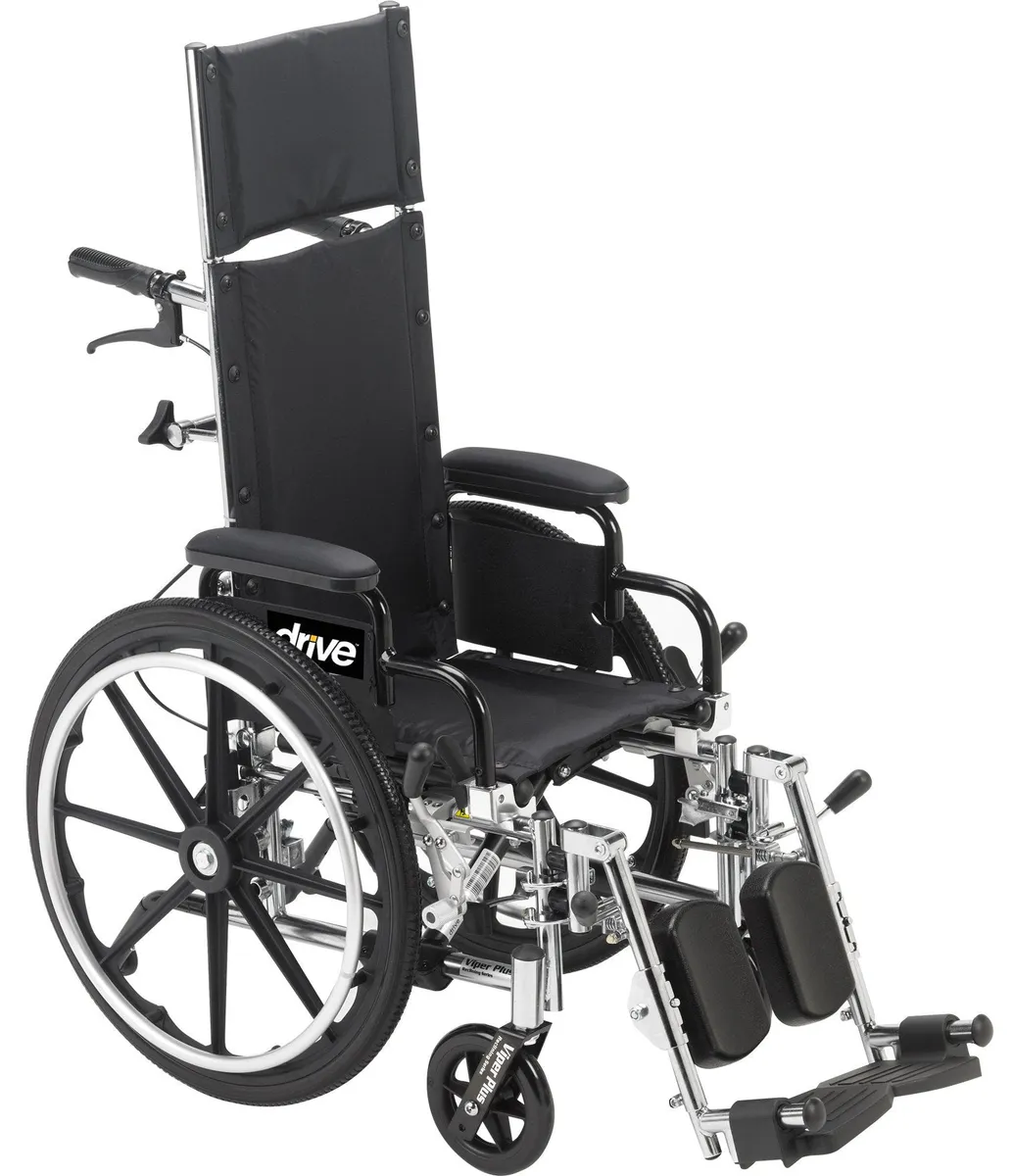
Drive Medical
drive™ Viper Plus Pediatric Reclining Wheelchair, 14-Inch Seat Width, 1 Case
$1,007.69USD

Cardinal
Wings Plus Underpads, Disposable, Heavy Absorbency, Beige, 23 X 36 Inch, 1 Bag of 10
$33.84USD
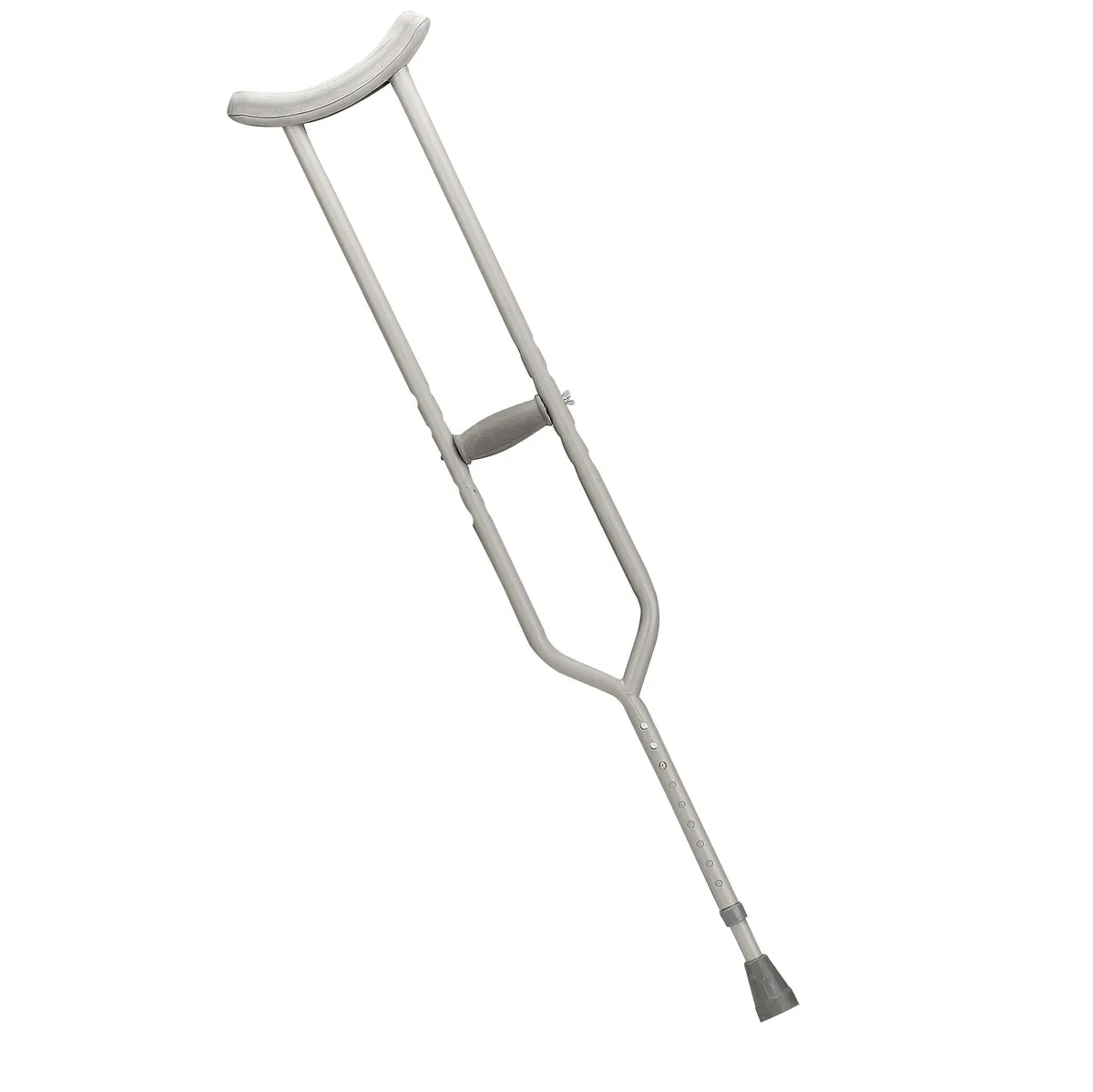
Drive Medical
drive™ Tall Adult Bariatric Crutches, 5 ft. 10 in. - 6 ft. 6 in., 1 Pair
$127.39USD

Lagasse
Oxivir® Tb Surface Disinfectant Wipes, 1 Carton of 160
$32.98USD
Rollators offer significantly more stability than traditional walkers for patients with balance or endurance limitations — with integrated seat and brakes.
Bedside commodes provide safe toileting for patients who cannot safely walk to the bathroom — often as 3-in-1 units (commode, toilet safety frame, shower chair).
Rollators (HCPCS E0143), bedside commodes (E0163), and seat lift mechanisms are covered under Medicare Part B with qualifying prescription.
Most DME folds for transport and adjusts for patient height (handle, seat, or footrest) without tools.
Durable medical equipment for assisted ambulation, toileting, and seating — rollators, bedside commodes, and modular seating support aging-in-place, post-surgical recovery, and long-term mobility limitations. Most items are Medicare-reimbursable with prescription.
Rollators suit patients with good upper-extremity strength who need rolling stability. Standard walkers suit patients needing to lift and reset each step. Wheelchairs suit non-ambulatory.
Rollator handle height should match the patient's wrist crease when standing with arms relaxed. Too high or low strains shoulders and reduces control.
Patients must learn to engage both hand brakes before sitting or stopping. Unbraked rollators are fall hazards — a common failure point.
Commodes go within arm's reach of the bed on the patient's strong side. Lock wheels on wheeled commodes before transfer. Two-staff assist for dependent patients.
Between patients, disinfect commode buckets, handles, and seating surfaces with a healthcare-grade disinfectant. Bucket and splash guard are removable for full cleaning.
Clinical use information is provided for reference only. Always follow facility protocols, manufacturer instructions for use (IFU), and evidence-based practice guidelines. Consult the treating clinician before use.
Standards & Certifications
A spec-by-spec comparison with the most common alternatives in the dme & bedside mobility category. Clinical interchangeability varies — always verify with your care team or facility protocol.
| Spec | This product Rollator Hand Grip Only Plastic | Hospital Supply HQ Tray only for 3-Wheel Rollator | Drive Medical Rollator 4-Wheel with Pouch & Padded Seat Red - Drive | Drive Medical Nitro Duet Rollator Red |
|---|---|---|---|---|
| HCPCS Eligible | Eligible | Eligible | Eligible | Eligible |
Comparison is provided for reference only. Brand names and trademarks belong to their respective owners. Specific SKUs may differ from category averages shown above.
Trusted manufacturer
An established medical products manufacturer supplying clinical teams with quality healthcare supplies.
Answers to the questions clinical buyers and care teams ask most about this product category.
Walkers are safer for patients who need a static point to push against for stability (they must lift and reset each step). Rollators are safer for patients with good upper-extremity strength who need rolling stability and an integrated seat for rest breaks.
Yes. Standard 4-wheel rollators are reimbursable under HCPCS E0143 with qualifying prescription and documentation. Heavy-duty rollators (E0149) are also covered for bariatric patients.
A bedside commode that also converts to a toilet safety frame (over an existing toilet) and/or shower chair. Useful in small bathrooms and for patients who need multiple uses from one piece of DME.
Match handle height to wrist crease with arms relaxed. Standard rollators accommodate patient heights 5'0"–6'2". Pediatric and bariatric sizes extend the range. Seat width (typically 18–22 inches) should fit the patient's hips with 1–2 inches clearance.
Remove the bucket and splash guard. Wash with warm water and detergent, then disinfect with a healthcare-grade disinfectant or dilute bleach solution. Wipe the frame, seat, and handles. Allow to air-dry before next use.
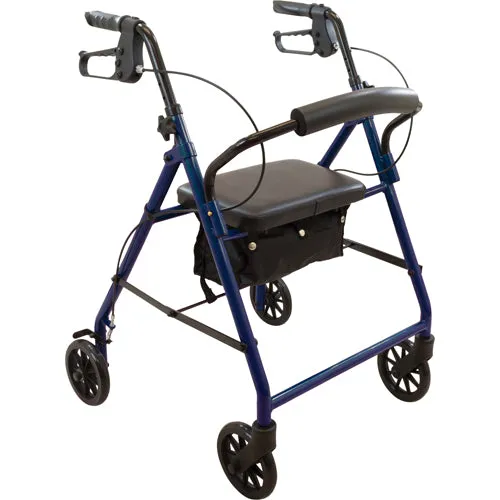
Hospital Supply HQ
Rollator Steel 6 Wheels Blue 300 lb. Weight Cap
$190.56USD
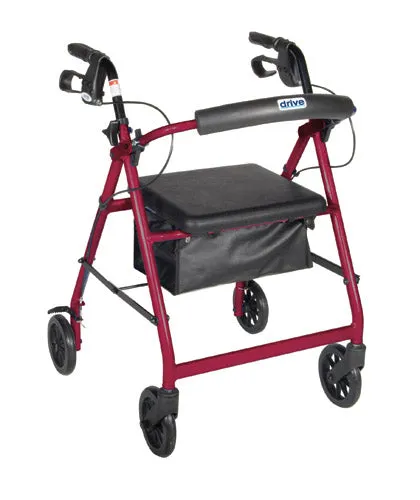
Drive Medical
Rollator 4-Wheel with Pouch & Padded Seat Red - Drive
$148.76USD
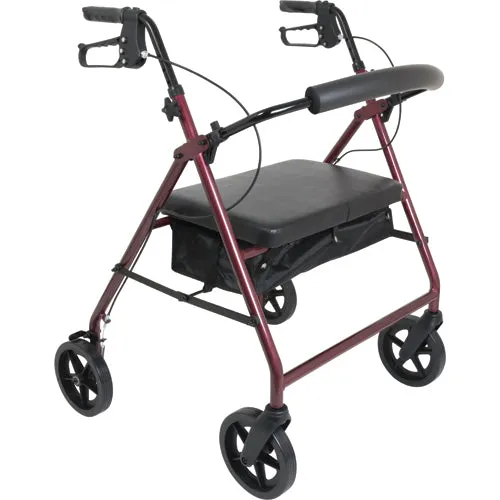
Hospital Supply HQ
Bariatric Rollator w/ 8 wheels Burgundy
$289.24USD
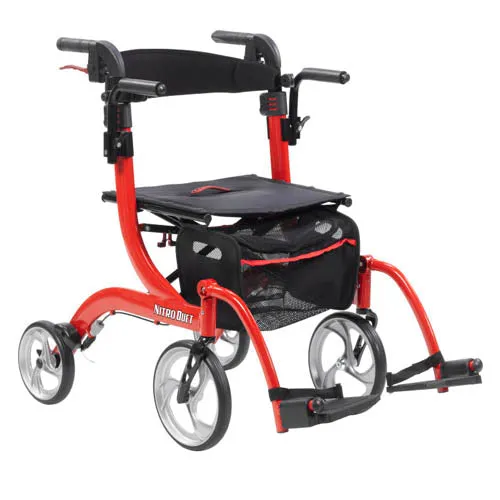
Drive Medical
Nitro Duet Rollator Red
$697.31USD

Hospital Supply HQ
Tray only for 3-Wheel Rollator
$24.85USD
Hospital Supply HQ
Rollator Push Down Brake Red
$119.32USD
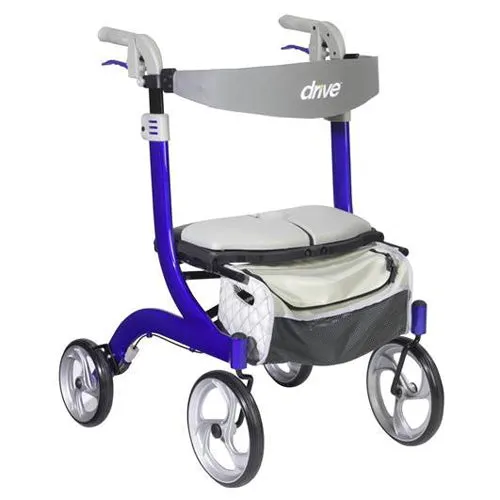
Drive Medical
Nitro DLX Rollator Firm Foam Seat Blue Frame
$631.53USD
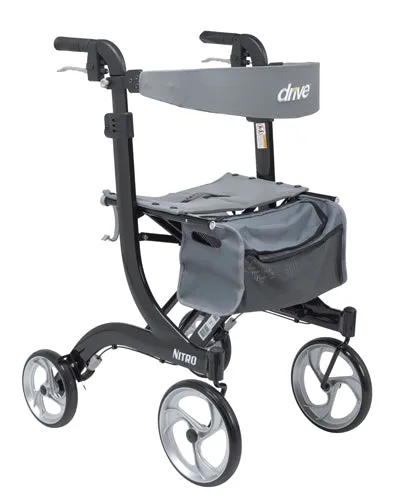
Drive Medical
Nitro Aluminum Rollator Black Tall Height w/10 Casters
$553.68USD
$22.44USD
$22.91USD
Save $0.47In stock. Order by 2pm PST for same-day processing.
In stock
Ships from our western US warehouses
Fast shipping
Same-day processing before 2pm PST
30-day returns
Hassle-free on eligible orders
HSA / FSA
Eligible for most medical accounts
$22.44USD
$22.91USD
Clinical Evidence
Journal of cardiopulmonary rehabilitation and prevention
A systematic review of randomized controlled or crossover studies on the effects of using a rollator compared with no aid in people with COPD.
Key Findings
Sample Size
7 studies, 126 participants
Clinical parkinsonism & related disorders
A prospective cohort study of community-dwelling people with Parkinson's disease, comparing falls during outdoor walks with and without rollator use over more than 6 months.
Key Findings
Sample Size
30 patients
American family physician
A clinical review for physicians on selecting, sizing and prescribing mobility assistive devices, including canes, walkers, rollators and wheelchairs, for older adults.
Key Findings
Clinical evidence is provided for informational purposes only. Healthcare professionals should evaluate products based on their clinical judgment and patient-specific factors. Links to external studies are provided as references and do not constitute endorsement. Always refer to the manufacturer's instructions for use.