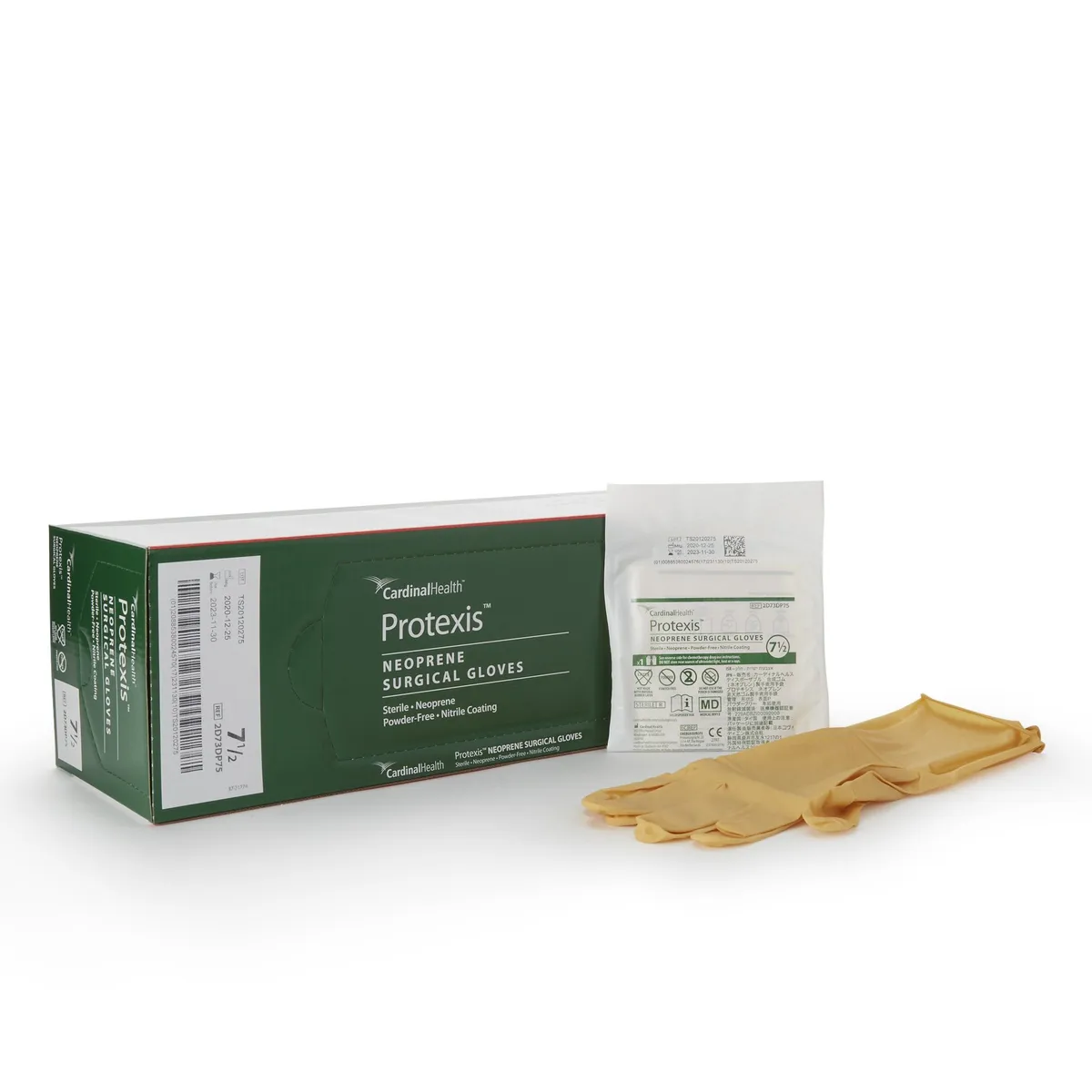
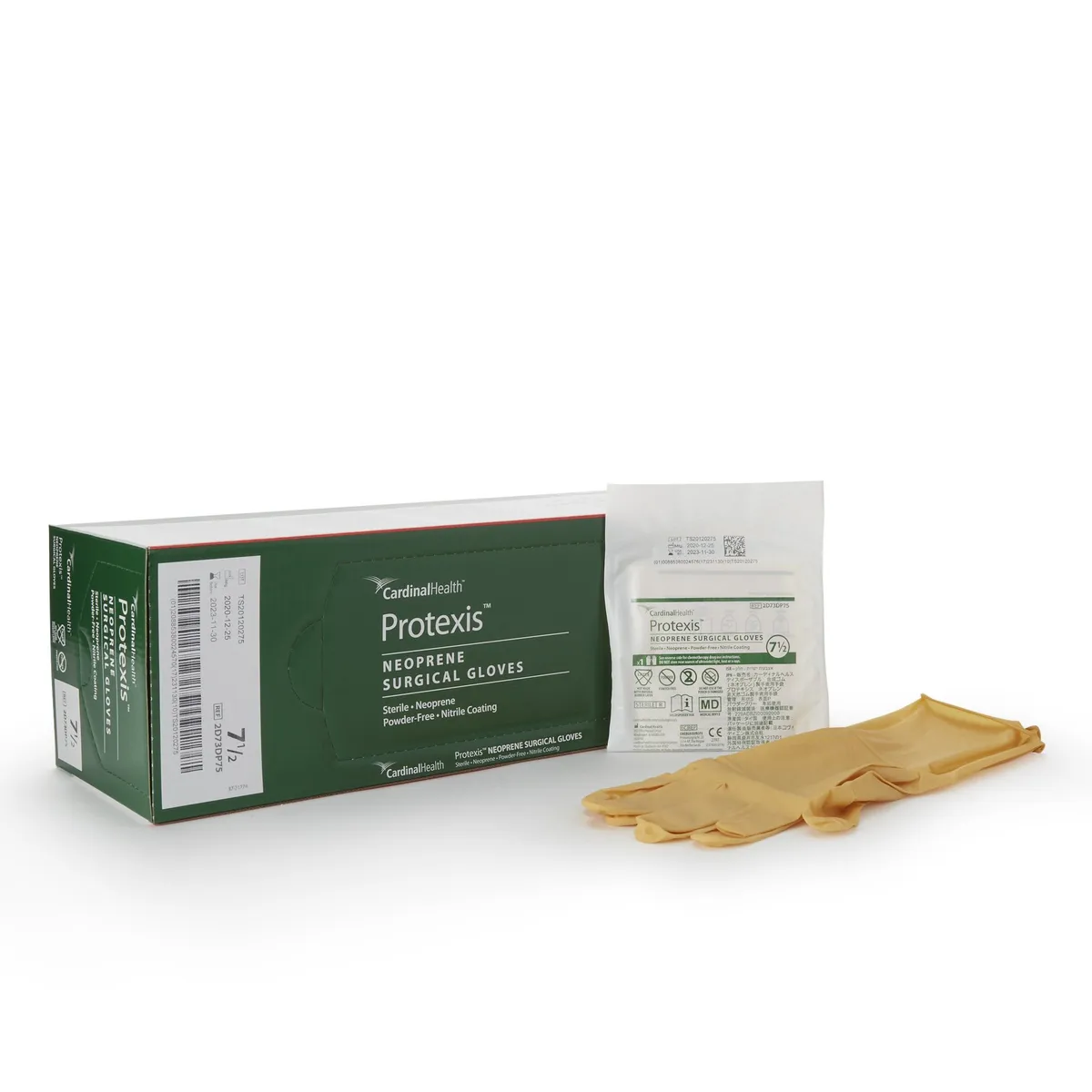
Hand hygiene first.
Wash hands with soap and water or alcohol-based rub before donning. Hands must be fully dry — wet hands make gloves tear during donning.
Other sizes, pack counts, and variants of the same product line.
Products commonly used alongside this one. Bundle them into a single order.
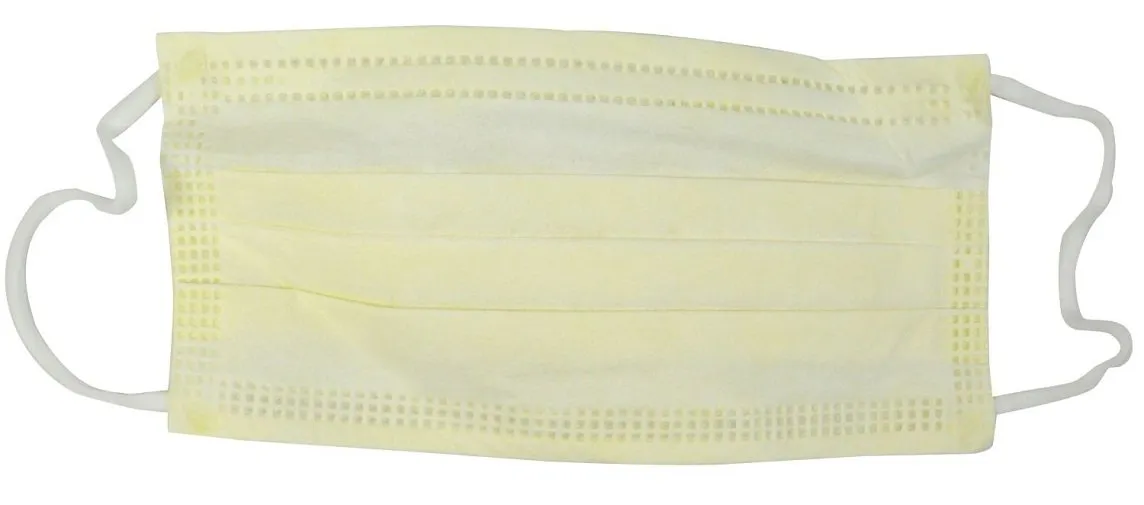
Cardinal
Secure-Gard® Procedure Mask, 1 Case of 500
$79.59USD

Cardinal
Convertors® AAMI Level 3 Protective Procedure Gown, 1 Case of 100
$257.24USD
Cardinal
Secure-Gard® Surgical Mask, 1 Case of 300
$81.20USD
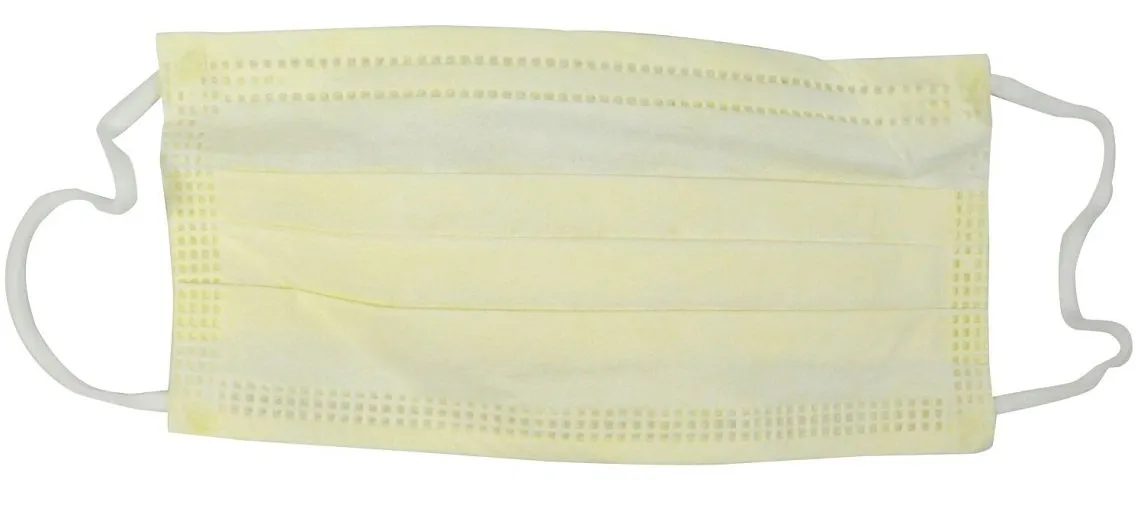
Cardinal
Secure-Gard® Procedure Mask, 1 Box of 50
$19.84USD
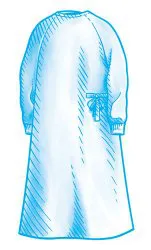
Cardinal
SmartGown™ Non-Reinforced Surgical Gown, 1 Case of 14
$261.63USD

Cardinal
Convertors® Impervious Procedure Gown, 1 Each
$16.40USD
Nitrile and surgical-grade formulations resist pinholes and tears during high-dexterity procedural and suturing work.
Nitrile and vinyl gloves eliminate latex allergy risk for staff and patients. Material is clearly labeled on every box.
Textured fingertips and thin-gauge construction preserve touch and grip for suturing, palpation, and instrument handling.
Acceptable Quality Level ratings define pinhole tolerance. Exam gloves meet AQL ≤2.5; surgical gloves meet the stricter AQL ≤1.5.
Medical gloves create a barrier between clinicians' hands and patients, protecting against bloodborne pathogens, bodily fluids, and cross-contamination. Material, sterility, and AQL determine fit for exam, procedural, and surgical use.
Wash hands with soap and water or alcohol-based rub before donning. Hands must be fully dry — wet hands make gloves tear during donning.
Gloves that are too tight tear; too loose fail to transmit tactile feedback. Fingertips should reach the end of the glove without bunching at the palm.
Pull the glove on by the cuff only. For sterile gloves, do not touch the outer surface with an ungloved hand — use the closed-glove or open-glove sterile technique.
Inspect for visible tears, holes, or discoloration before patient contact. Any compromise to the barrier means replace before touching the patient.
Pinch the outside cuff of one glove, peel off inside-out. Slide a bare finger under the remaining glove at the wrist and peel off over the first. Discard immediately; perform hand hygiene.
Clinical use information is provided for reference only. Always follow facility protocols, manufacturer instructions for use (IFU), and evidence-based practice guidelines. Consult the treating clinician before use.
Standards & Certifications
A spec-by-spec comparison with the most common alternatives in the gloves category. Clinical interchangeability varies — always verify with your care team or facility protocol.
| Spec | This product Protexis™ Polychloroprene Surgical Glove, Size 7.5, Ivory, 1 Case of 200 | Cardinal Protexis™ Polychloroprene Surgical Glove, Size 7, Ivory, 1 Case of 200 | Cardinal Protexis™ Polychloroprene Surgical Glove, Size 6.5, Ivory, 1 Case of 200 | Cardinal Protexis™ PI Polyisoprene Surgical Glove, Size 9, Ivory, 1 Case of 200 |
|---|---|---|---|---|
| Material | Latex | Latex | Latex | Polyisoprene |
| AQL | 1.5 | 1.5 | 1.5 | 1.5 |
| Sterility | Sterile | Sterile | Sterile | — |
| Chemo Tested | No | No | No | No |
| Powder Status | Powder-free | Powder-free | Powder-free | Powder-free |
Comparison is provided for reference only. Brand names and trademarks belong to their respective owners. Specific SKUs may differ from category averages shown above.
A Fortune 15 healthcare distribution leader
Cardinal Health serves more than 90% of U.S. hospitals and manufactures a broad line of branded medical products — from wound care staples to advanced surgical supplies.
Answers to the questions clinical buyers and care teams ask most about this product category.
Nitrile is the clinical default — latex-free, puncture-resistant, and chemically durable. Vinyl is lower-cost with less barrier protection and looser fit; appropriate for short, low-risk tasks. Latex has excellent fit and tactile feedback but poses allergy risk and is being phased out of most facilities.
Acceptable Quality Level is the maximum percentage of gloves in a batch allowed to have pinholes or defects. Exam gloves are rated AQL ≤2.5; surgical gloves meet a stricter AQL ≤1.5. Lower AQL means tighter quality control and fewer barrier failures.
Chemotherapy-tested gloves are specifically evaluated for permeation resistance against hazardous drugs under ASTM D6978. Always check the product label — not every nitrile glove is chemo-rated, and pharmacy compounding protocols require the ASTM D6978 mark.
Exam gloves are non-sterile and appropriate for routine patient contact, standard precautions, and most procedural work. Sterile gloves are required for surgical procedures, central line placement, and any procedure entering a sterile body cavity.
Measure hand circumference across the widest part of the palm (excluding thumb). Map to XS (<7"), S (7–7.5"), M (7.5–8"), L (8–9"), XL (>9"). Too-tight gloves fatigue the hand and tear; too-loose gloves lose tactile sensitivity.
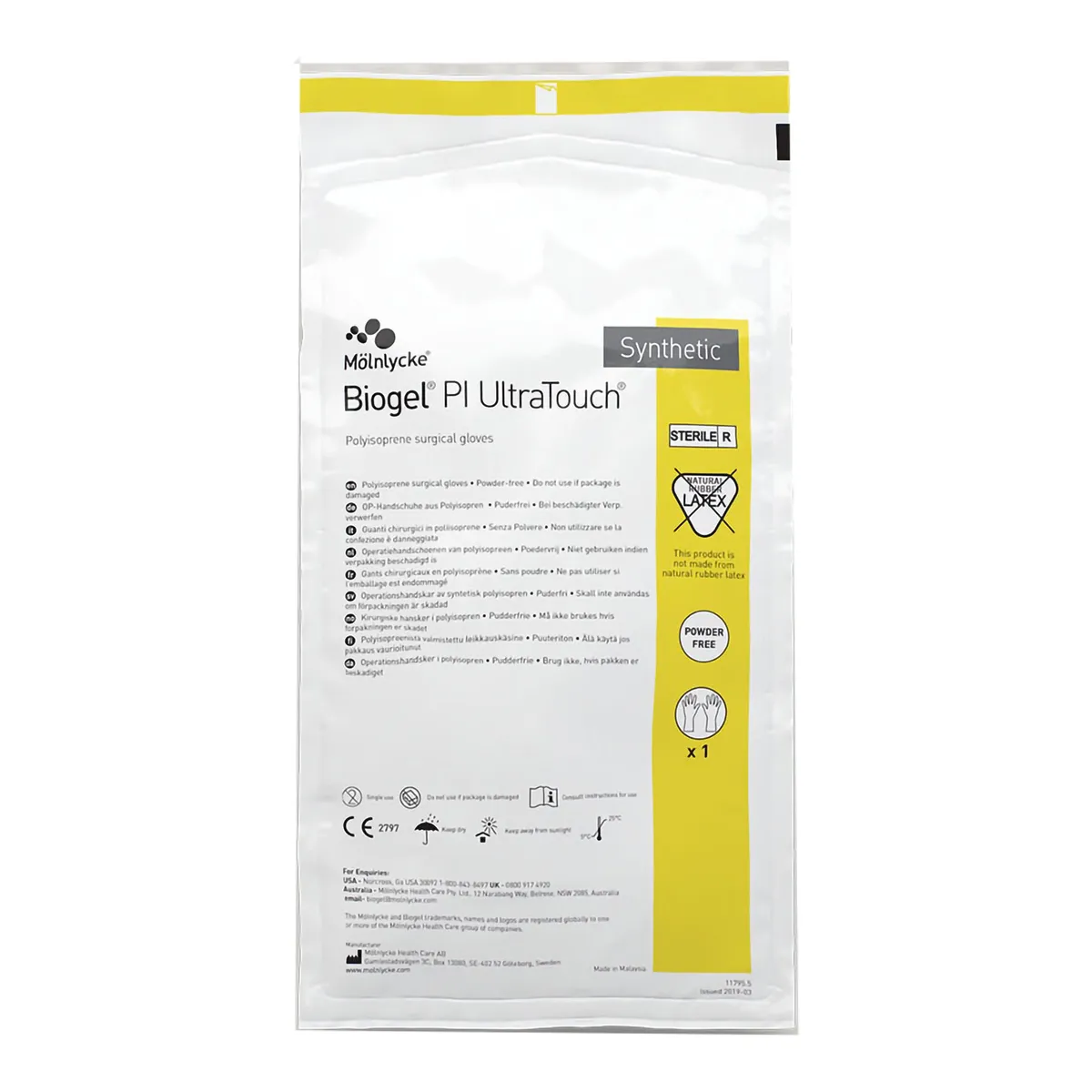
Molnlycke
Biogel® PI UltraTouch™ Polyisoprene Surgical Glove, Size 6.5, Opaque Beige, 1 Box of 50
$214.19USD
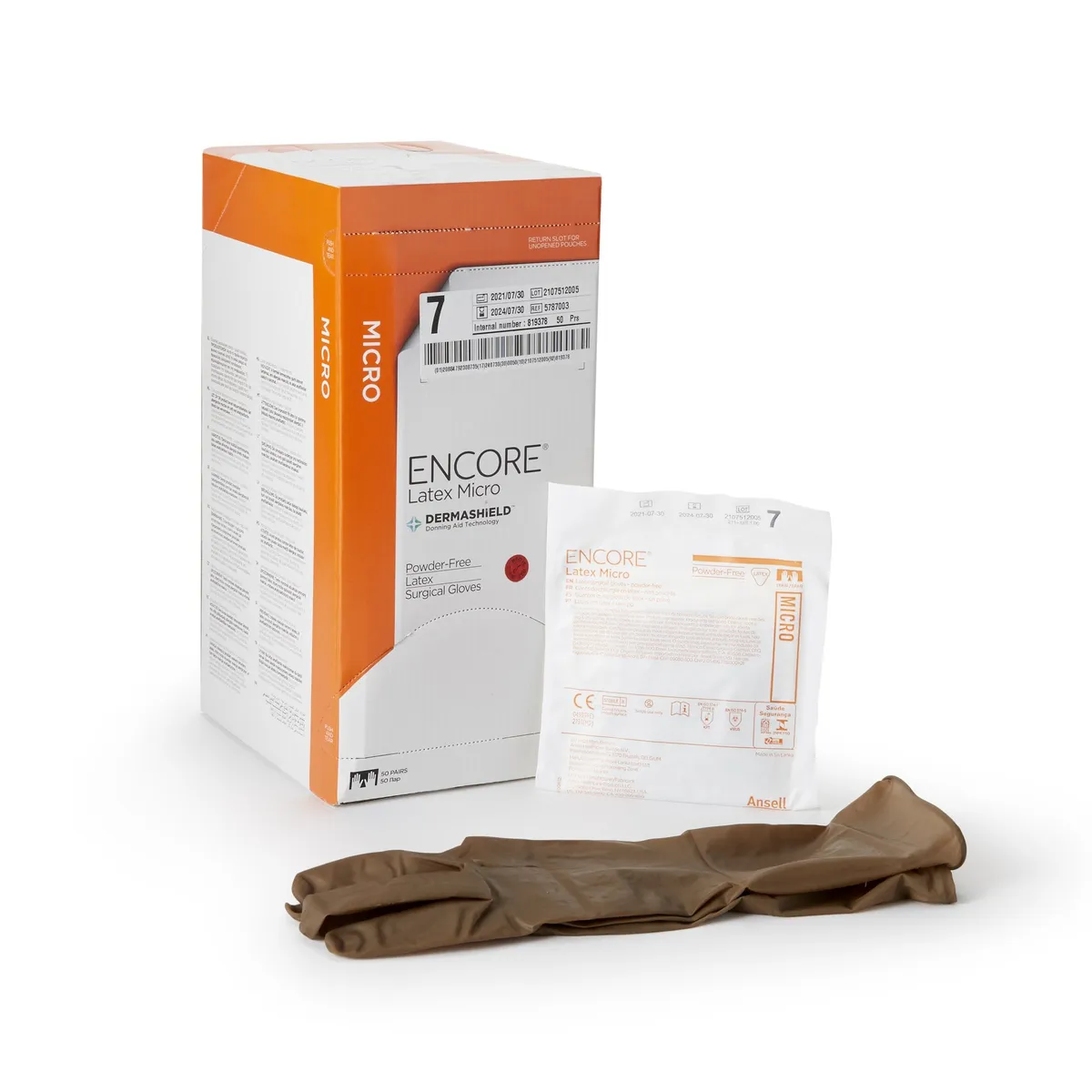
Ansell
Encore® Latex Micro Surgical Glove, Size 7, Brown, 1 Box of 50
$103.09USD
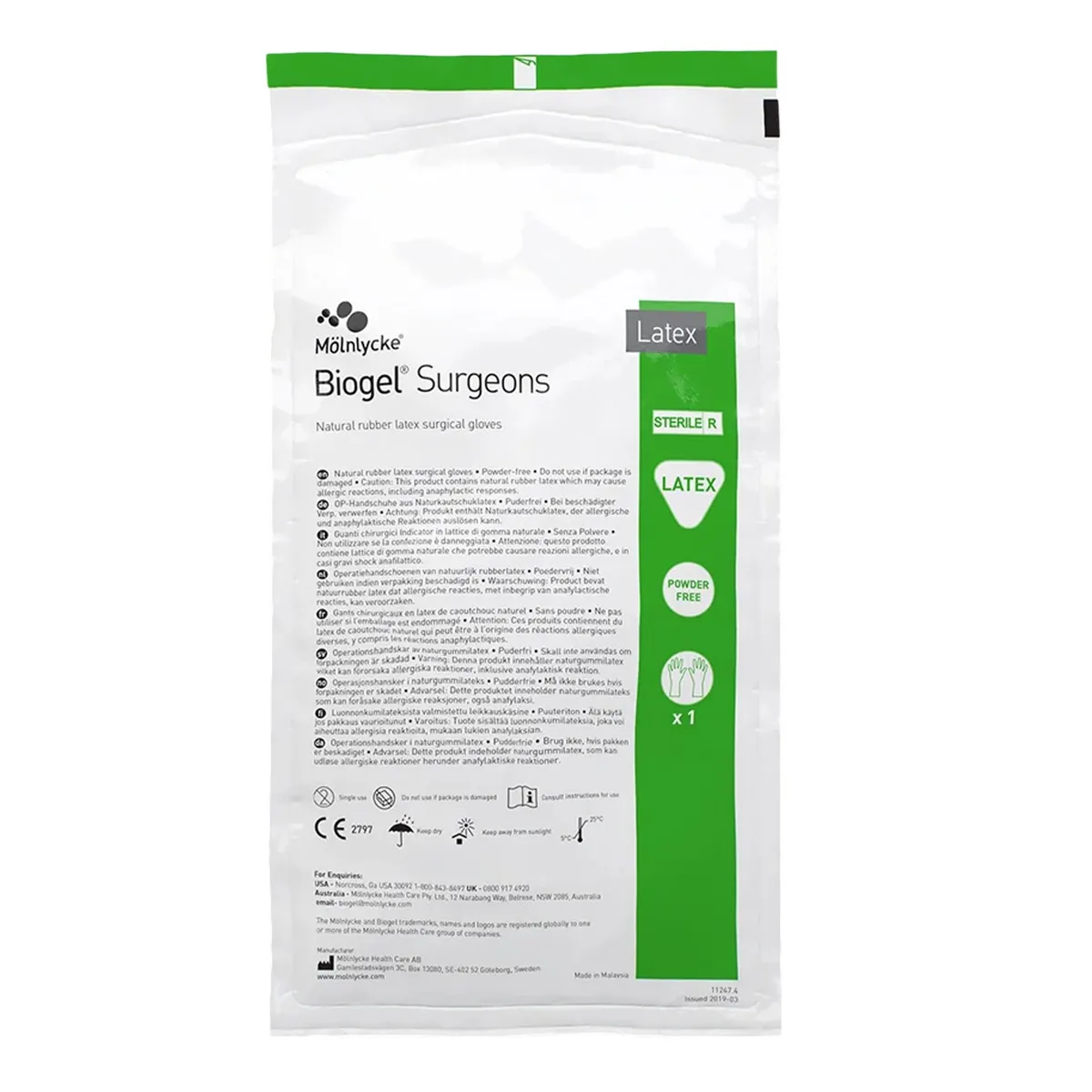
Molnlycke
Biogel® Surgeons Latex Surgical Glove, Size 8.5, Straw Color, 1 Pair
$16.47USD

Cardinal
Protexis™ PI Polyisoprene Surgical Glove, Size 9, Ivory, 1 Case of 200
$778.59USD

Cardinal
Protexis™ Latex Micro Surgical Glove, Size 8, Light Brown, 1 Box of 50
$170.19USD
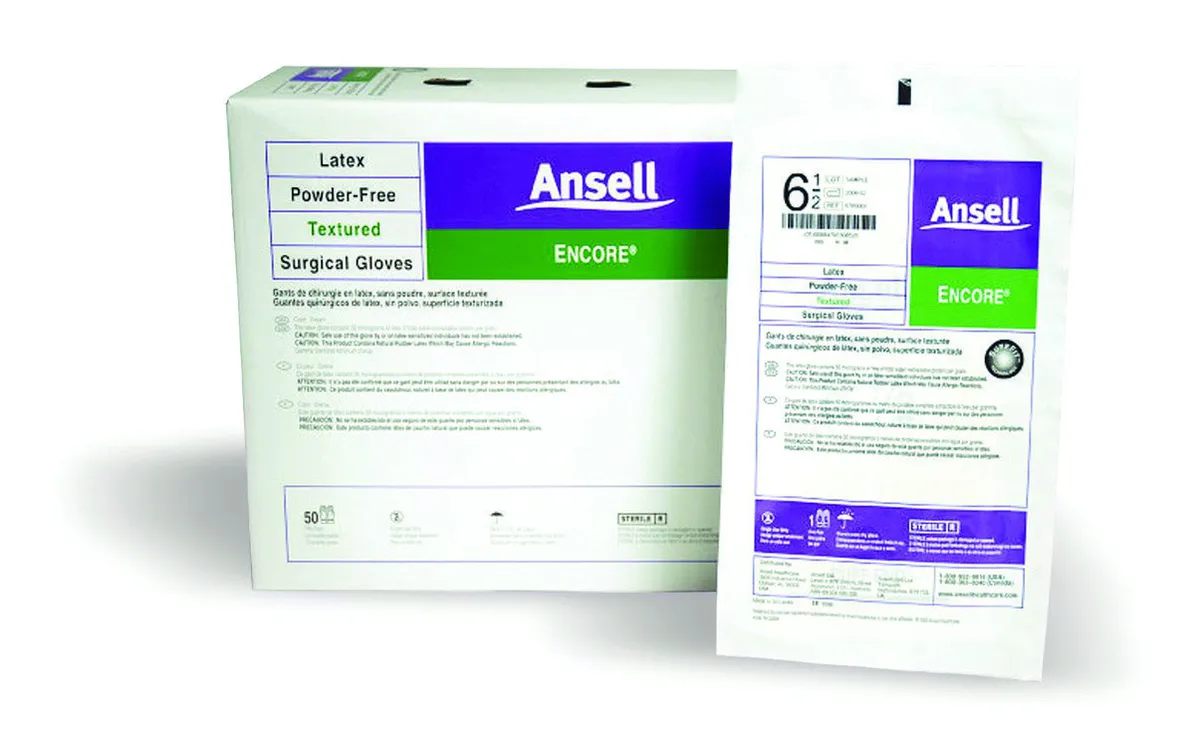
Ansell
Encore® Latex Textured Surgical Glove, Size 6.5, Ivory, 1 Box of 50
$92.49USD
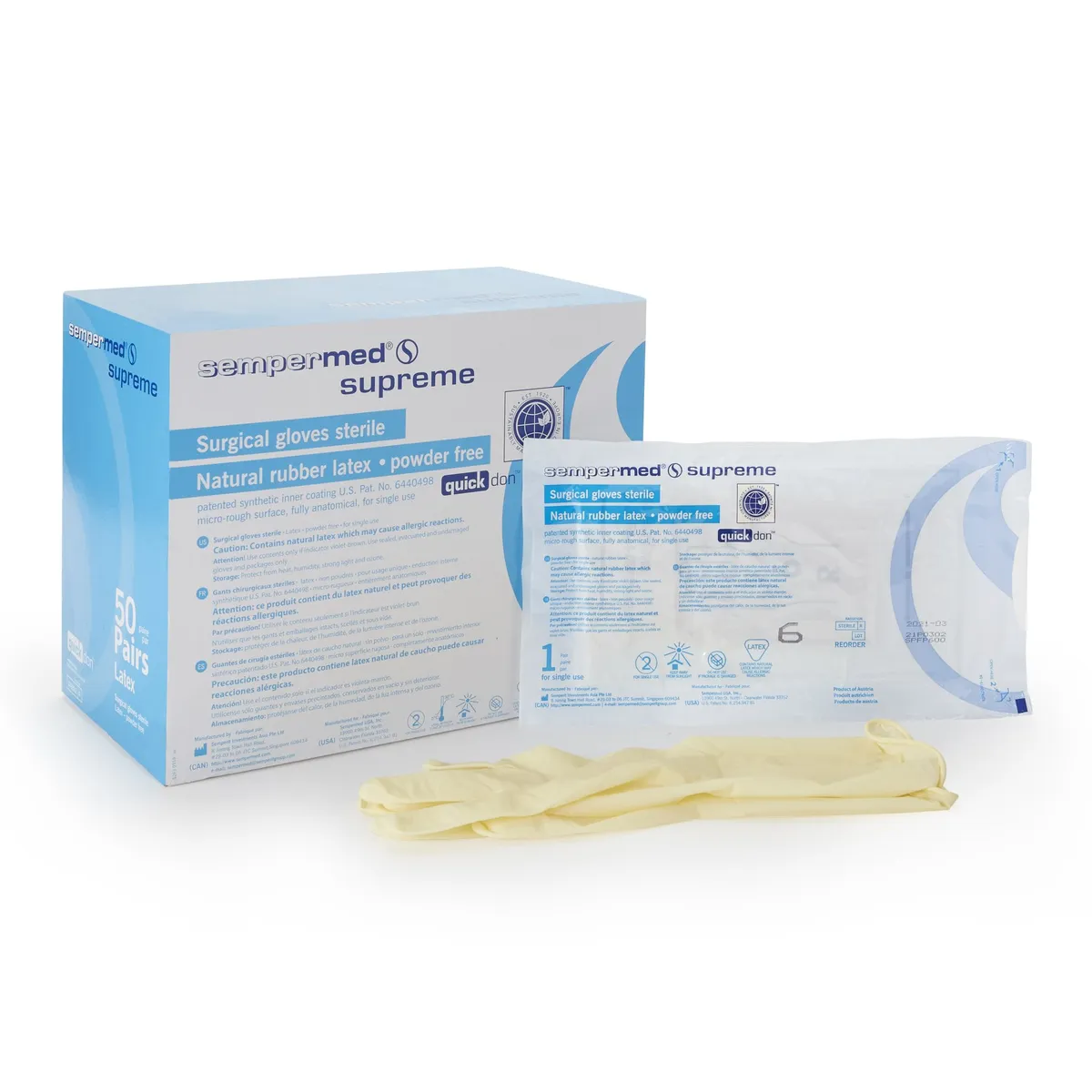
Sempermed USA
Sempermed® Supreme Latex Surgical Glove, Size 6, Ivory, 1 Case of 300
$651.71USD
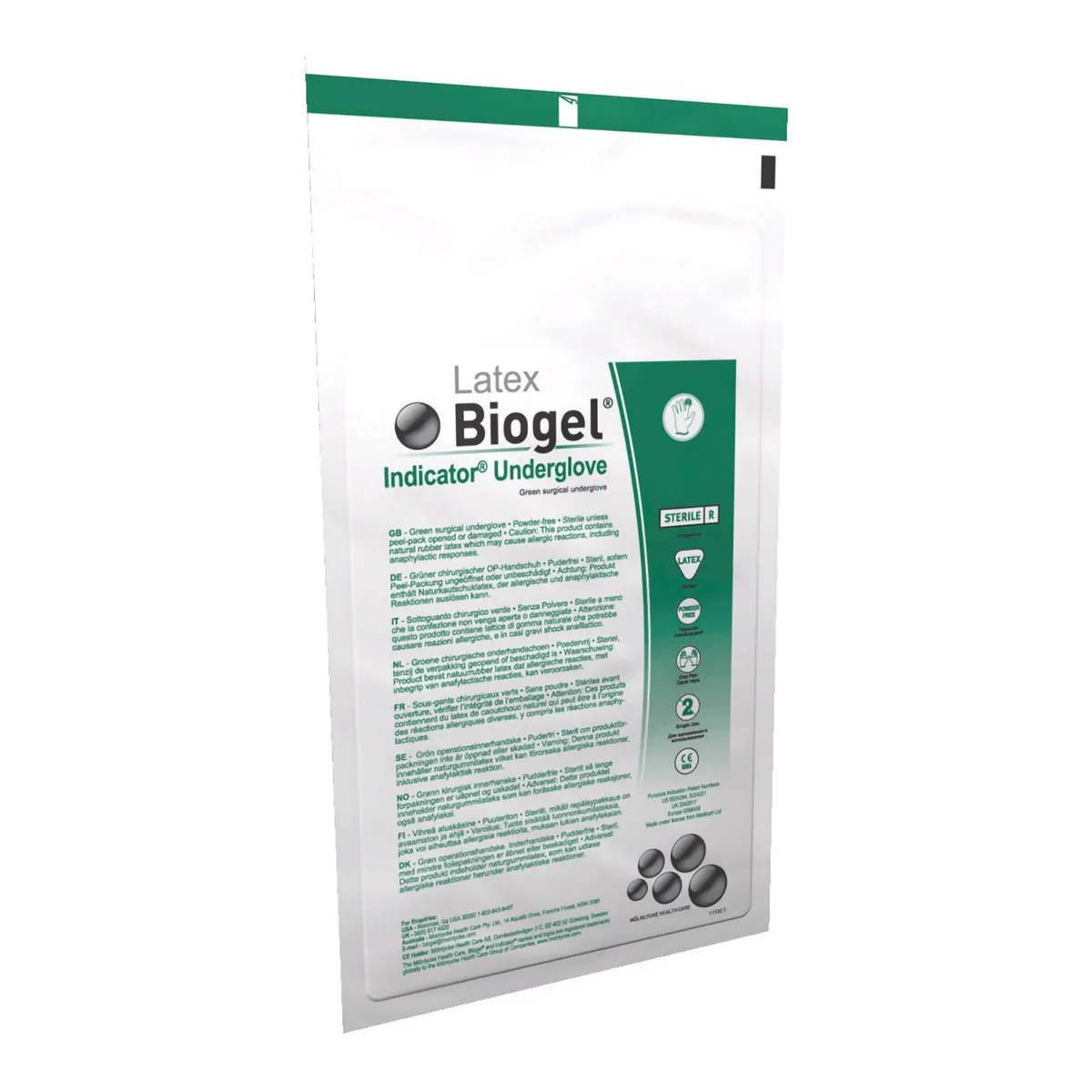
Molnlycke
Biogel® Indicator™ Latex Surgical Underglove, Size 7.5, Green, 1 Pair
$16.47USD
$1,012.13USD
$1,095.33USD
Save $83.20$5.06 each, 200 per pack
In stock. Order by 2pm PST for same-day processing.
In stock
Ships from our western US warehouses
Fast shipping
Same-day processing before 2pm PST
30-day returns
Hassle-free on eligible orders
HSA / FSA
Eligible for most medical accounts
$1,012.13USD
$1,095.33USD
Clinical Evidence
Systematic reviews
A systematic review and meta-analysis of randomised trials comparing single gloving with double gloving (standard or indicator gloves) among surgical personnel.
Key Findings
Sample Size
18 RCTs
Journal of advanced nursing
A systematic review and meta-analysis of randomised trials comparing double gloving with single gloving for preventing surgical glove perforation and blood contamination.
Key Findings
Sample Size
7 RCTs, 7,090 gloves
Work (Reading, Mass.)
A systematic review and meta-analysis of studies reporting how often surgical gloves are perforated during operations and which factors are associated with perforation.
Key Findings
Sample Size
109 articles, 130 datasets
Clinical evidence is provided for informational purposes only. Healthcare professionals should evaluate products based on their clinical judgment and patient-specific factors. Links to external studies are provided as references and do not constitute endorsement. Always refer to the manufacturer's instructions for use.