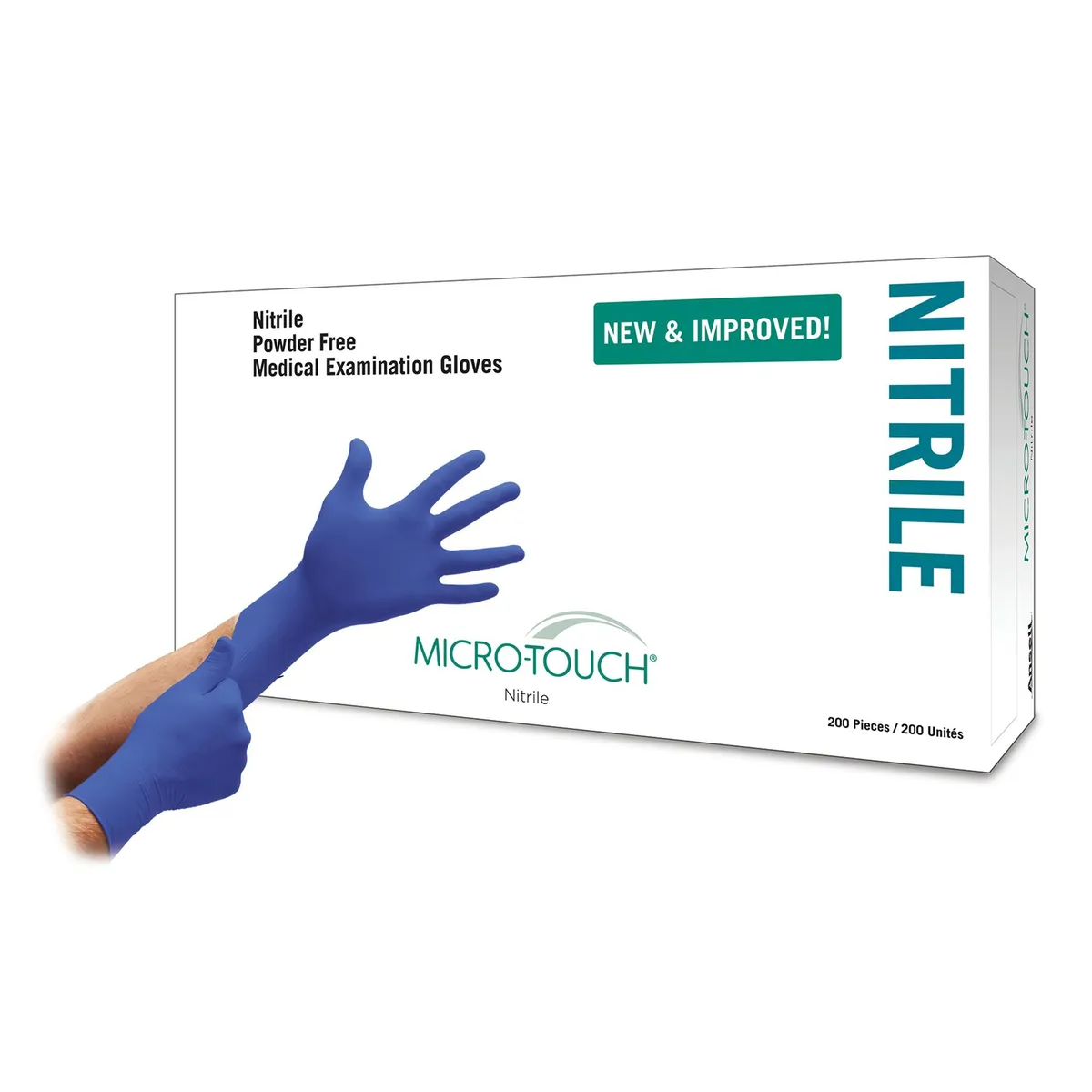
Hand hygiene first.
Wash hands with soap and water or alcohol-based rub before donning. Hands must be fully dry — wet hands make gloves tear during donning.
Other sizes, pack counts, and variants of the same product line.
Products commonly used alongside this one. Bundle them into a single order.
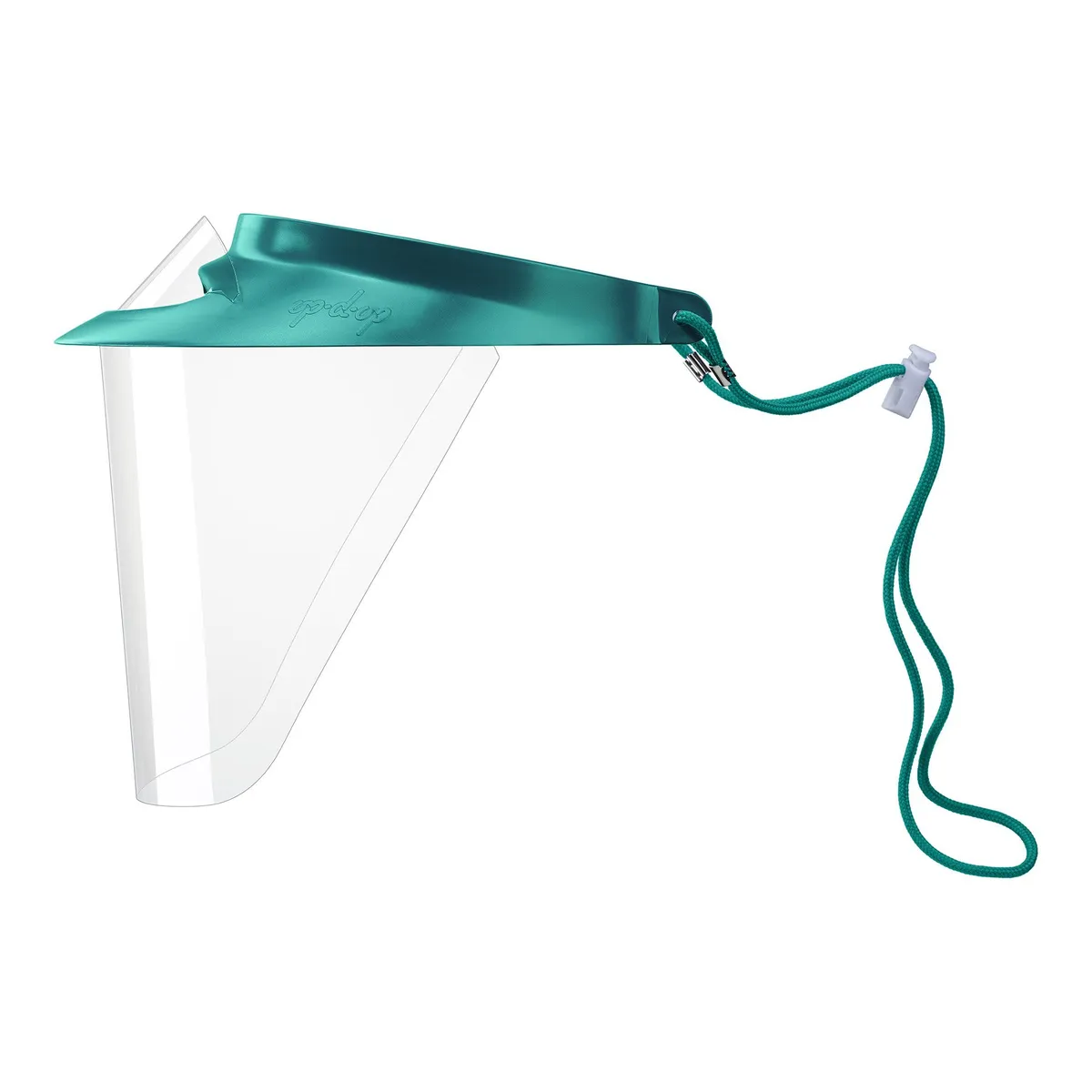
Op-D-Op
FACESHIELD KIT, W/1 VISOR 2SHLD TEAL
$69.19USD
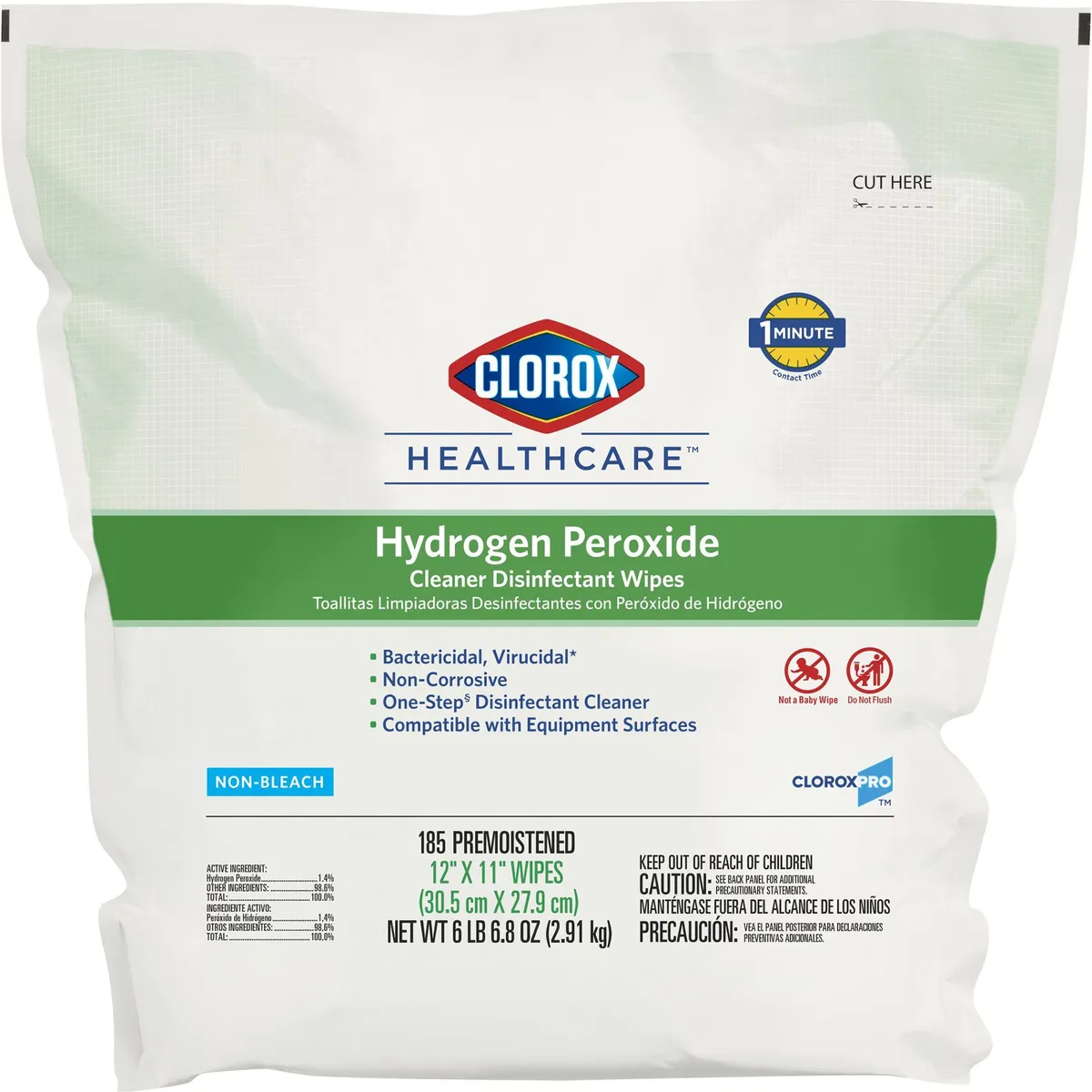
The Clorox Company
Clorox® Healthcare® Surface Disinfectant Cleaner, 1 Case of 2
$88.09USD
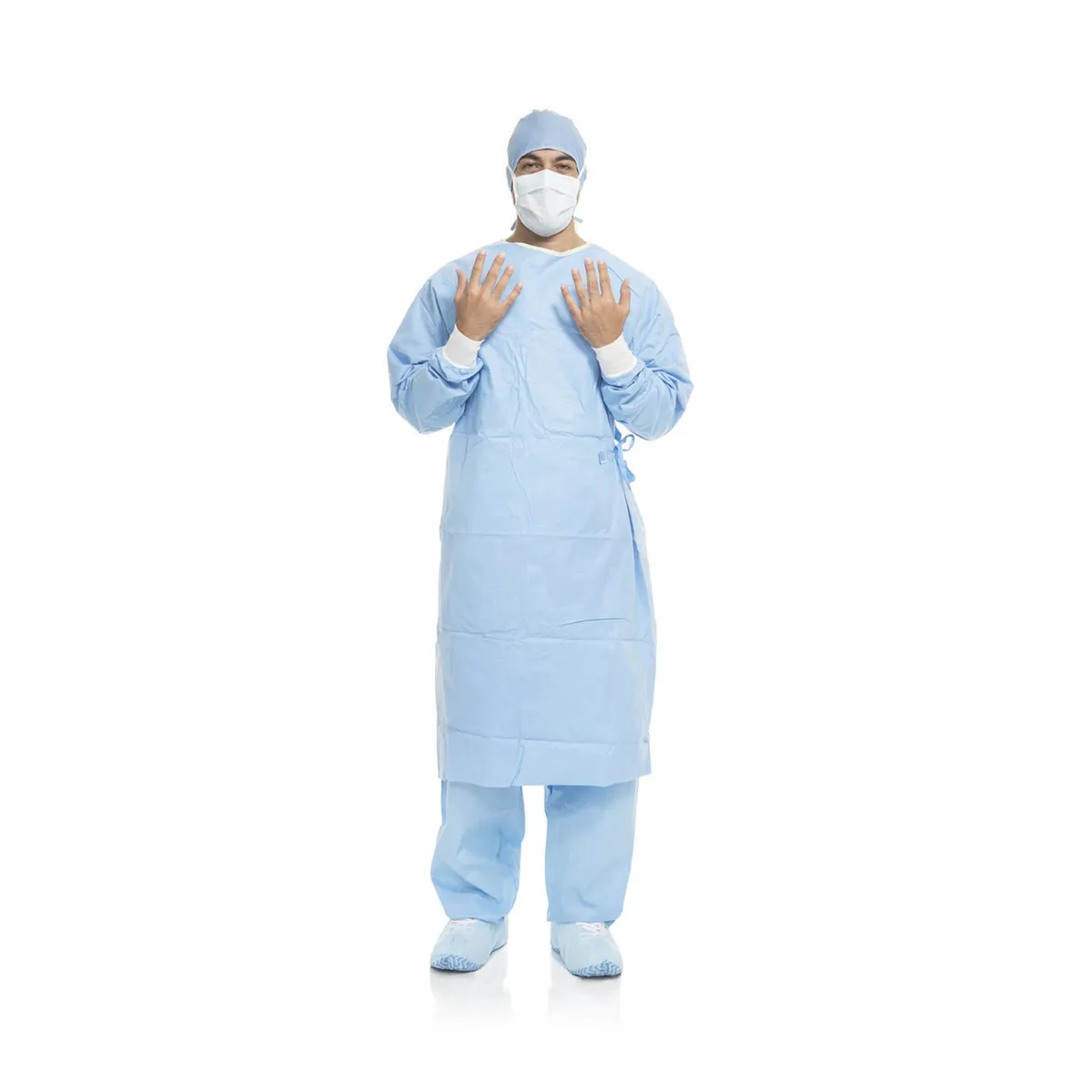
O&M Halyard Inc
AERO BLUE Surgical Gown with Towel, Small, 1 Case of 34
$354.99USD
Aspen Surgical Products
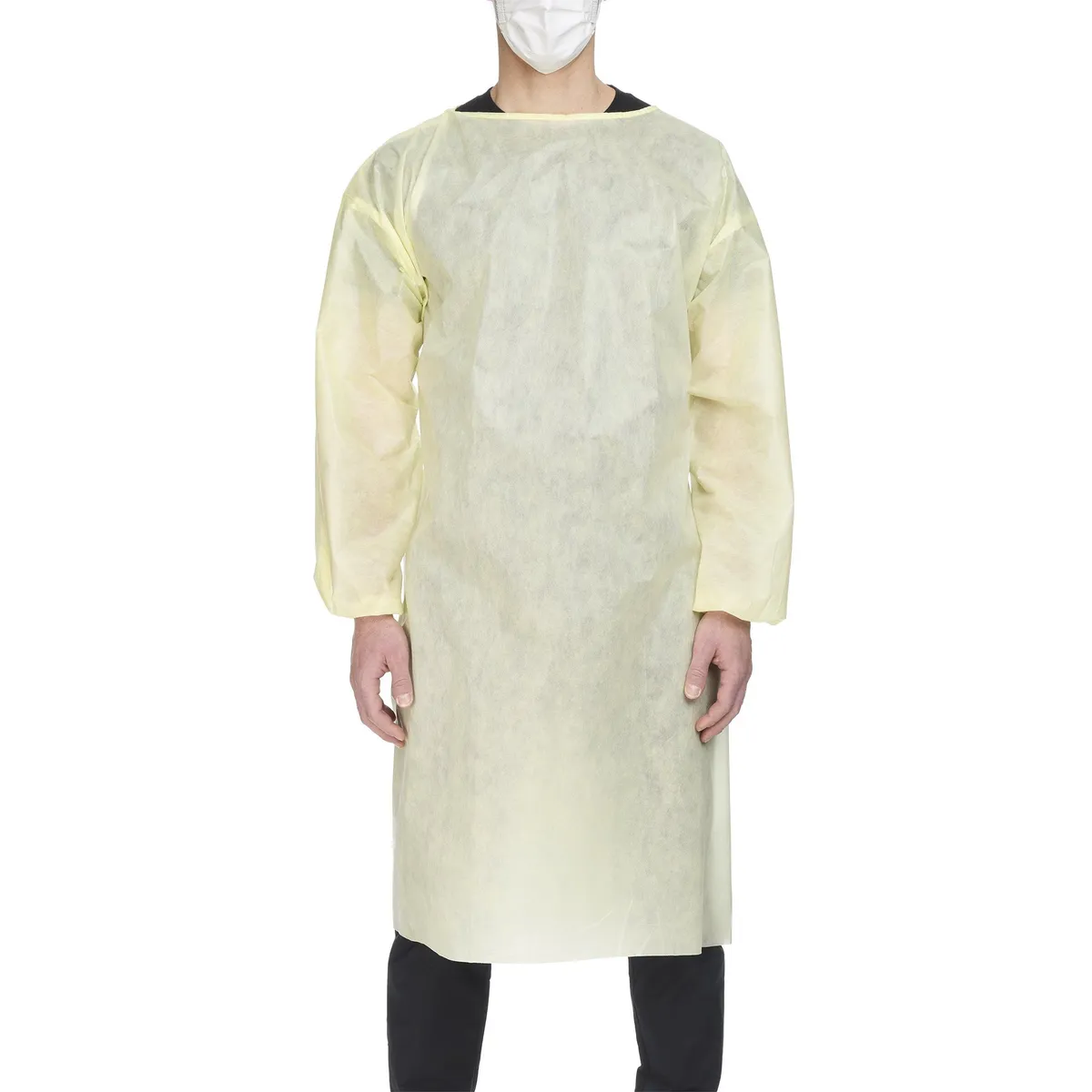
Precept® Full Coverage Isolation Gown, Extra Large, 1 Bag of 10
$28.20USD
Lagasse
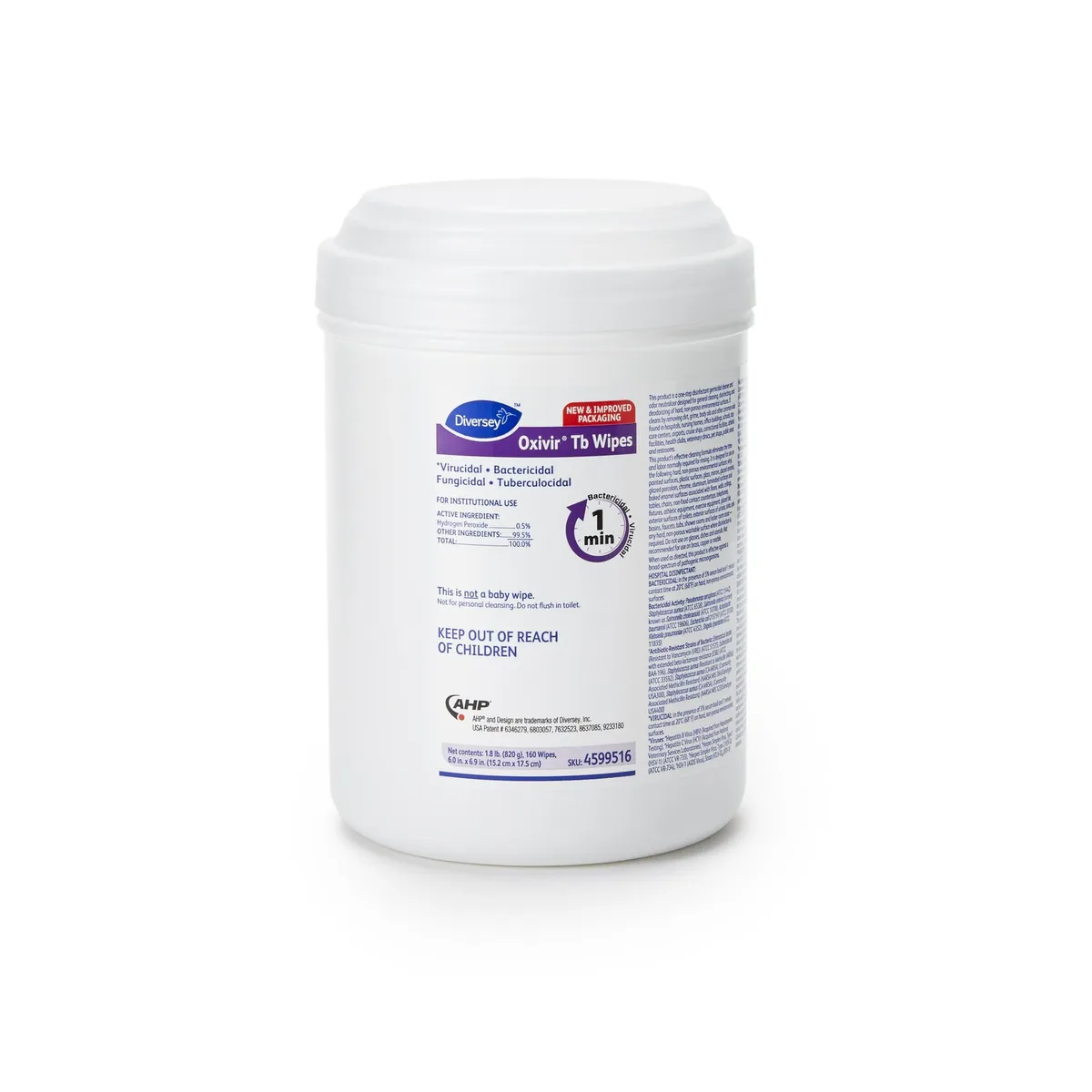
Oxivir® Tb Surface Disinfectant Wipes, 1 Carton of 160
$32.98USD
Aspen Surgical Products
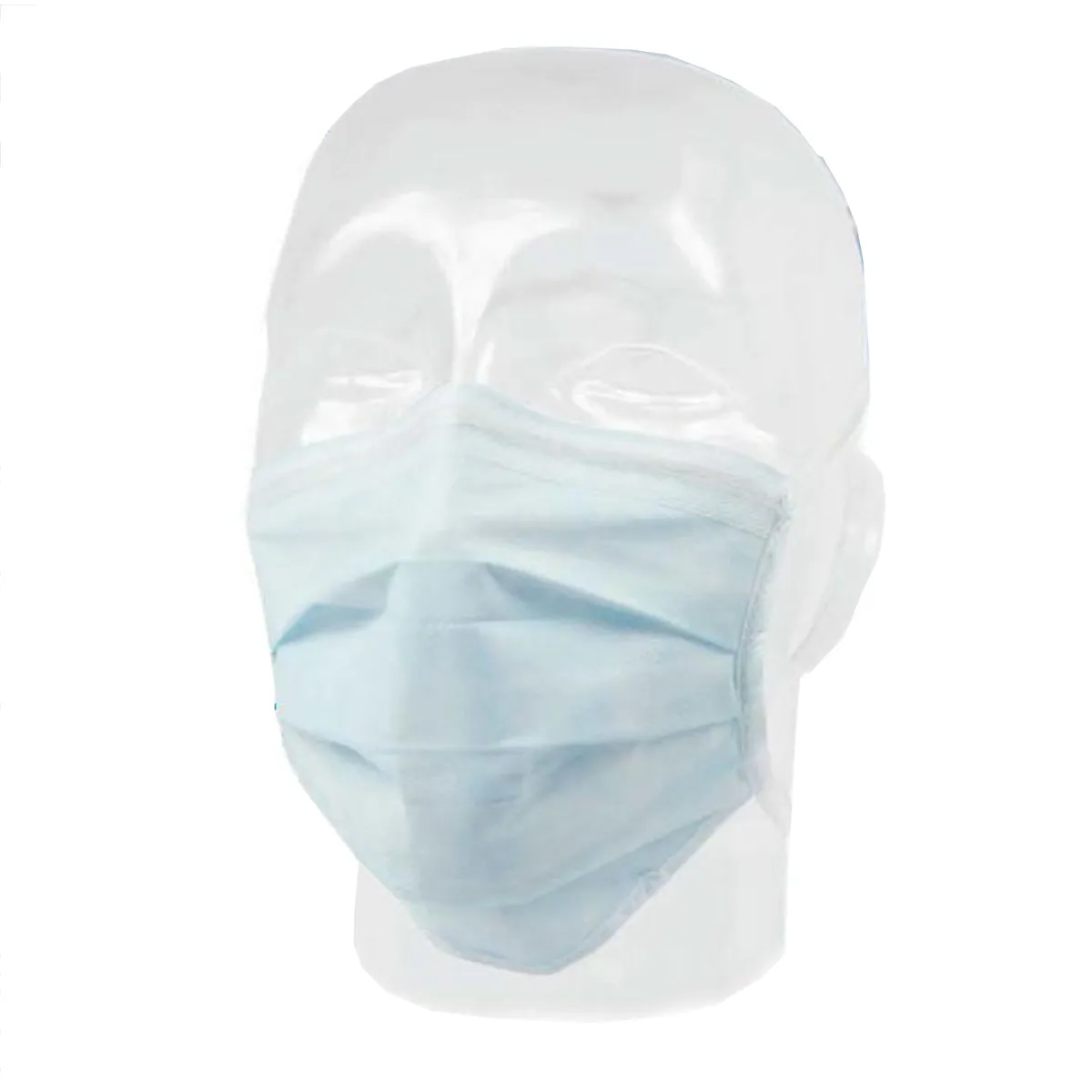
Comfort-Cool™ Surgical Mask, 1 Box of 50
$26.15USD
Nitrile and surgical-grade formulations resist pinholes and tears during high-dexterity procedural and suturing work.
Nitrile and vinyl gloves eliminate latex allergy risk for staff and patients. Material is clearly labeled on every box.
Textured fingertips and thin-gauge construction preserve touch and grip for suturing, palpation, and instrument handling.
Acceptable Quality Level ratings define pinhole tolerance. Exam gloves meet AQL ≤2.5; surgical gloves meet the stricter AQL ≤1.5.
Medical gloves create a barrier between clinicians' hands and patients, protecting against bloodborne pathogens, bodily fluids, and cross-contamination. Material, sterility, and AQL determine fit for exam, procedural, and surgical use.
Wash hands with soap and water or alcohol-based rub before donning. Hands must be fully dry — wet hands make gloves tear during donning.
Gloves that are too tight tear; too loose fail to transmit tactile feedback. Fingertips should reach the end of the glove without bunching at the palm.
Pull the glove on by the cuff only. For sterile gloves, do not touch the outer surface with an ungloved hand — use the closed-glove or open-glove sterile technique.
Inspect for visible tears, holes, or discoloration before patient contact. Any compromise to the barrier means replace before touching the patient.
Pinch the outside cuff of one glove, peel off inside-out. Slide a bare finger under the remaining glove at the wrist and peel off over the first. Discard immediately; perform hand hygiene.
Clinical use information is provided for reference only. Always follow facility protocols, manufacturer instructions for use (IFU), and evidence-based practice guidelines. Consult the treating clinician before use.
Standards & Certifications
A spec-by-spec comparison with the most common alternatives in the gloves category. Clinical interchangeability varies — always verify with your care team or facility protocol.
| Spec | This product Micro-Touch® Nitrile Exam Glove, Extra Large, Blue, 1 Box | Microflex Medical Micro-Touch® Nitrile Exam Glove, Medium, Blue, 1 Case of 1000 | Ansell Micro-Touch® Nitrile Extended Cuff Length Exam Glove, Medium, Blue, 1 Box | Innovative Healthcare Corp NitriDerm® EC Nitrile Extended Cuff Length Exam Glove, Extra Large, Blue, 1 Box of 50 |
|---|---|---|---|---|
| Material | Nitrile | Nitrile | Nitrile | Nitrile |
| AQL | ≤2.5 | ≤2.5 | ≤2.5 | ≤2.5 |
| Sterility | Non-sterile | — | — | Sterile |
| Thickness (mil) | — | 5.1 | 4.7 | — |
| Chemo Tested | Yes | Yes | No | Yes |
| Powder Status | Powder-free | Powder-free | Powder-free | Powder-free |
Comparison is provided for reference only. Brand names and trademarks belong to their respective owners. Specific SKUs may differ from category averages shown above.
Trusted manufacturer
An established medical products manufacturer supplying clinical teams with quality healthcare supplies.
Answers to the questions clinical buyers and care teams ask most about this product category.
Nitrile is the clinical default — latex-free, puncture-resistant, and chemically durable. Vinyl is lower-cost with less barrier protection and looser fit; appropriate for short, low-risk tasks. Latex has excellent fit and tactile feedback but poses allergy risk and is being phased out of most facilities.
Acceptable Quality Level is the maximum percentage of gloves in a batch allowed to have pinholes or defects. Exam gloves are rated AQL ≤2.5; surgical gloves meet a stricter AQL ≤1.5. Lower AQL means tighter quality control and fewer barrier failures.
Chemotherapy-tested gloves are specifically evaluated for permeation resistance against hazardous drugs under ASTM D6978. Always check the product label — not every nitrile glove is chemo-rated, and pharmacy compounding protocols require the ASTM D6978 mark.
Exam gloves are non-sterile and appropriate for routine patient contact, standard precautions, and most procedural work. Sterile gloves are required for surgical procedures, central line placement, and any procedure entering a sterile body cavity.
Measure hand circumference across the widest part of the palm (excluding thumb). Map to XS (<7"), S (7–7.5"), M (7.5–8"), L (8–9"), XL (>9"). Too-tight gloves fatigue the hand and tear; too-loose gloves lose tactile sensitivity.
Innovative Healthcare Corp
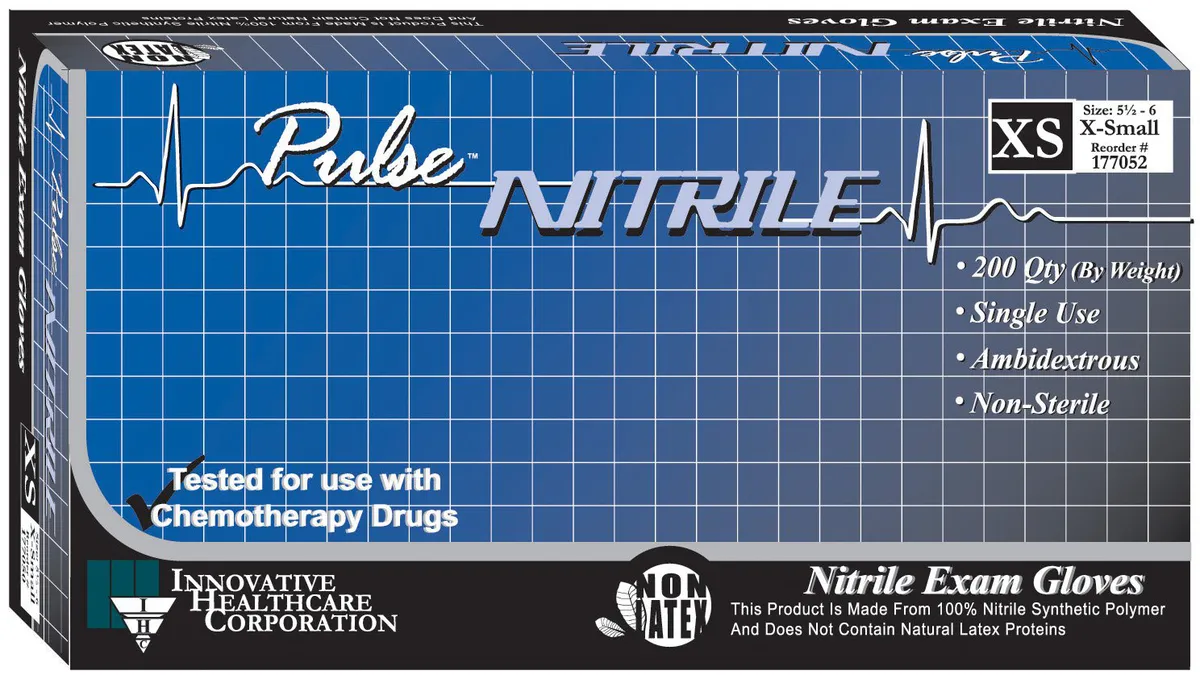
Pulse® Nitrile Standard Cuff Length Exam Glove, Small, Lavender, 1 Box of 200
$34.43USD
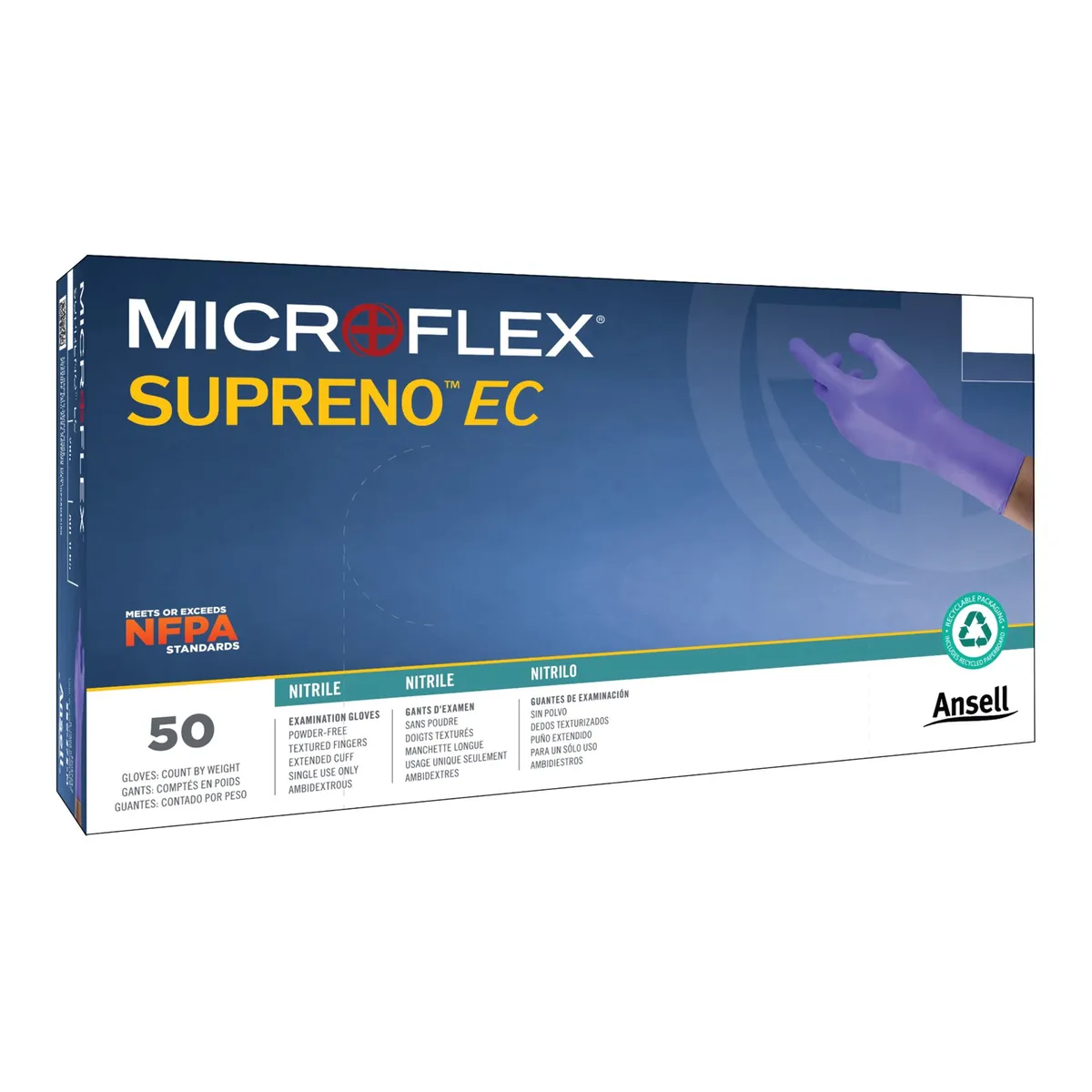
Microflex Medical
Supreno® EC Nitrile Extended Cuff Length Exam Glove, Small, Blue, 1 Box of 50
$27.13USD
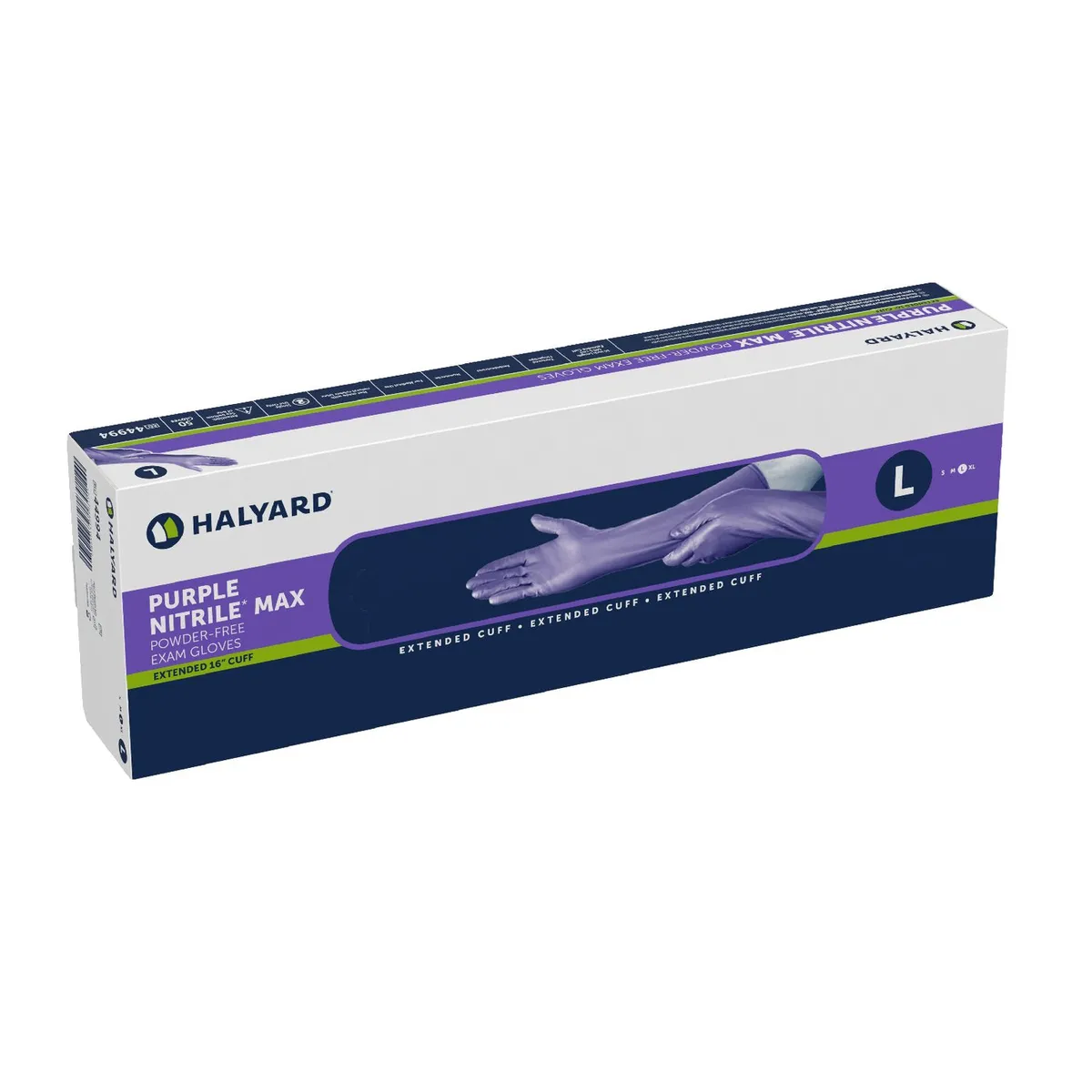
O&M Halyard Inc
Purple Nitrile Max™ Nitrile Extended Cuff Length Exam Glove, Large, 1 Box of 50
$79.99USD
Ansell
Micro-Touch® Plus Latex Exam Glove, Medium, Ivory, 1 Case of 400
$211.60USD
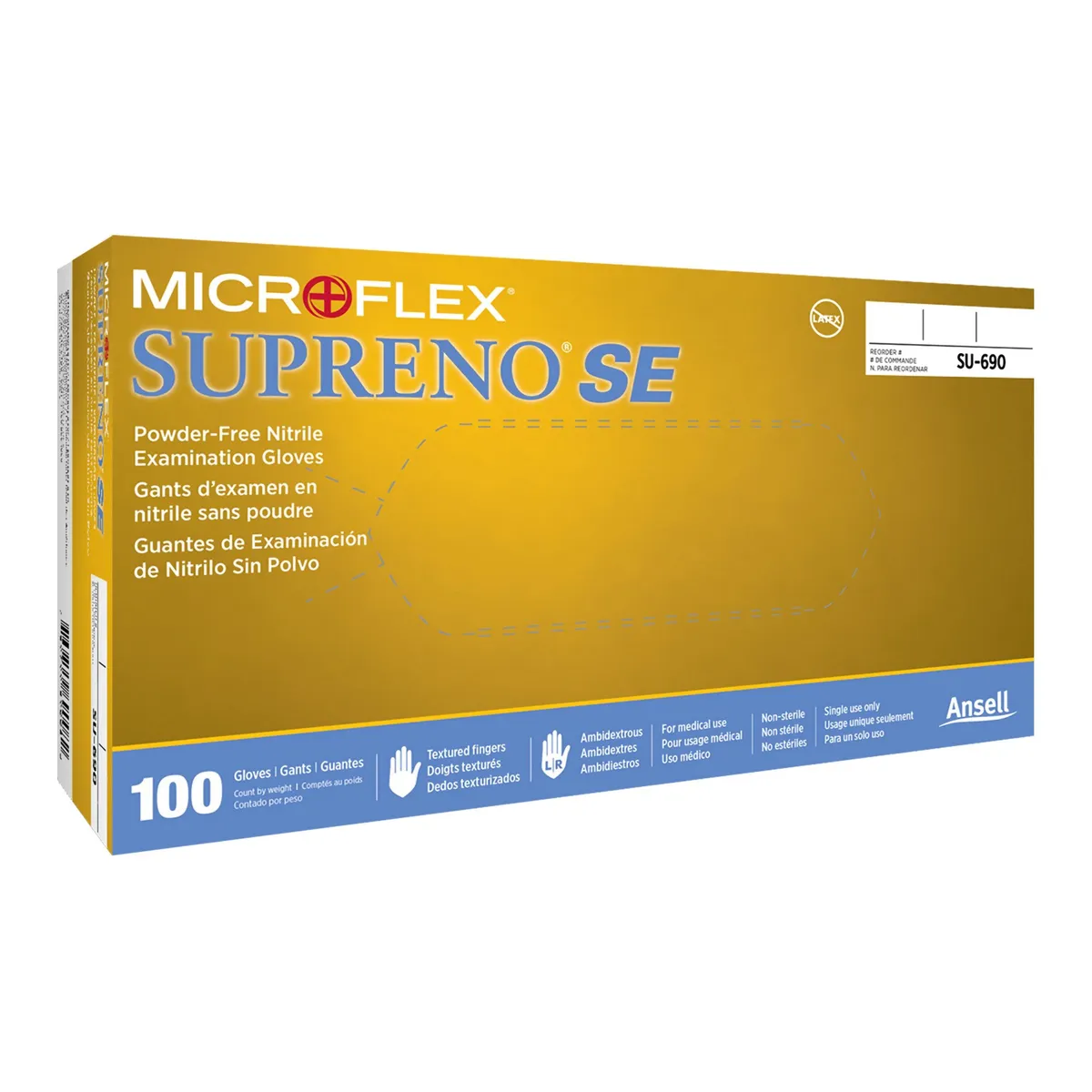
Microflex Medical
Supreno® SE Exam Glove, Extra Small, Blue, 1 Case of 1000
$190.99USD
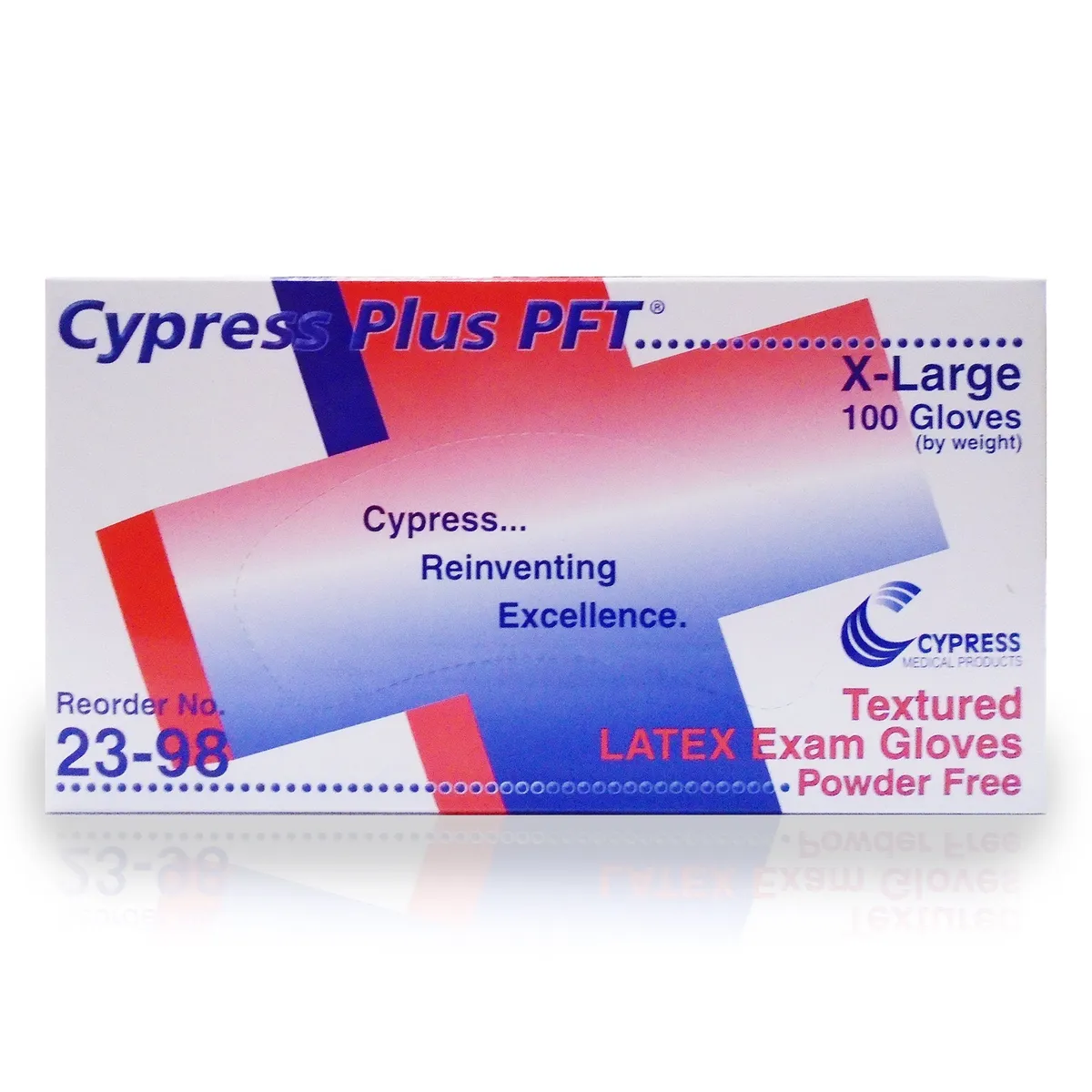
McKesson Medical Surgical
Cypress Plus® PFT Latex Standard Cuff Length Exam Glove, Extra Large, Ivory, 1 Box of 100
$25.13USD
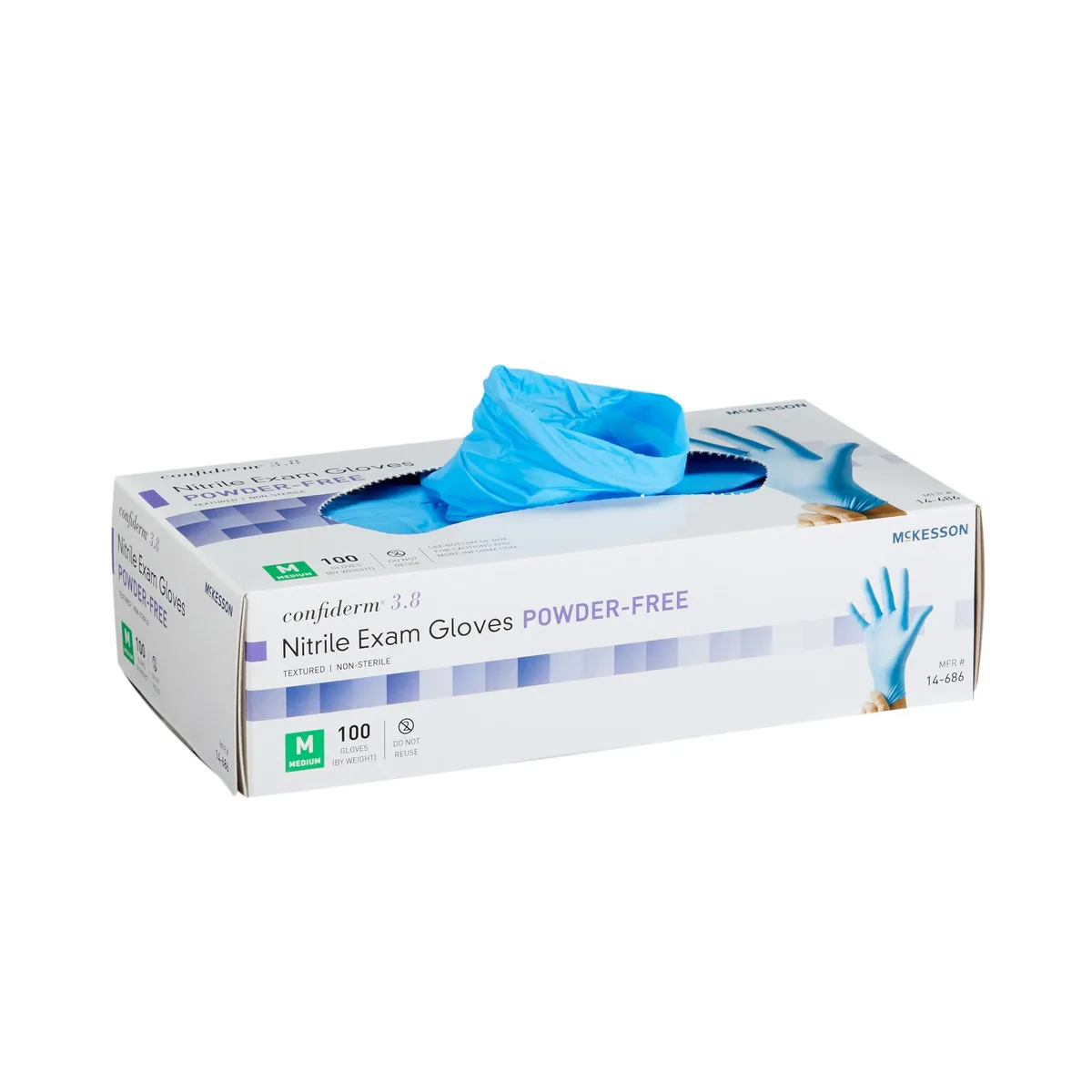
McKesson Brand
McKesson Confiderm® 3.8 Nitrile Exam Glove, Medium, Blue, 1 Box of 100
$30.60USD

Innovative Healthcare Corp
NitriDerm® EC Nitrile Extended Cuff Length Exam Glove, Extra Large, Blue, 1 Box of 50
$57.09USD
$36.09USD
In stock. Order by 2pm PST for same-day processing.
In stock
Ships from our western US warehouses
Fast shipping
Same-day processing before 2pm PST
30-day returns
Hassle-free on eligible orders
HSA / FSA
Eligible for most medical accounts
$36.09USD
$33.12USD
Clinical Evidence
JAMA
A cluster-randomized trial in 20 US intensive care units tested whether requiring healthcare workers to wear gloves and gowns for all patient contact reduced acquisition of MRSA or VRE compared with usual care.
Key Findings
Sample Size
20 ICUs, 26,180 patients
Infection control and hospital epidemiology
A multicenter, 3-arm randomized trial in healthcare personnel at 4 hospitals compared applying alcohol-based hand rub directly to gloved hands with the standard practice of changing gloves and with usual care.
Key Findings
Clinical evidence is provided for informational purposes only. Healthcare professionals should evaluate products based on their clinical judgment and patient-specific factors. Links to external studies are provided as references and do not constitute endorsement. Always refer to the manufacturer's instructions for use.